In a way, our modern understanding of extinction starts with the elephant.
It was while studying fossilized teeth of two different elephant ancestors, the mammoth and the mastodon, that scientists first became aware of the fact that species could die out and become forever extinct. In 1796, French naturalist George Cuviercompared mastodon and mammoth tooth fossils to the teeth of modern African and Asian elephants, positing that the teeth belonged to species that were “lost” in the past. This was a bold, new revelation—one that stood in stark contrast to attitudes of the time. The massive consumption of ivory in the 1800s was unprecedented; with delicate fans, billiard balls, hair combs and ivory veneer piano keys being made of the tusks elephants use as tools for eating, drinking and breathing.
In a Connecticut newspaper, published the same year as Cuvier’s hypothesis, one observer wrote:
The Elephant is the largest, the strongest, the most sagacious, and the longest-lived of all brute creation. The species is numerous, does not decrease, and is dispersed over all of the southern parts of Asia and Africa.
Elephants were indeed seen as innumerous. By 1850, American manufacturers were killing the animals in droves. A billiard ball company boasted it had brought down 1,140 elephants.
But at the same time, the burgeoning American conservation movement was gaining momentum. One champion, President Teddy Roosevelt, designated five national parks during his eight years as commander-in-chief. In February 1909, Roosevelt convened the North American Conservation Conference, the first ever international meeting on conservation policy.
Dubbed the “conservation president,” despite his reputation as an avid hunter, Roosevelt “embodied the dilemma of how to both use and preserve nature,” advances a new exhibition “Elephants and Us: Considering Extinction,” now on view in the Albert H. Small Documents Gallery at the Smithsonian’s National Museum of American History.
If fact in March 1909, just one month after the conservation conference, Roosevelt led a Smithsonian Institution expedition to Kenya, killing 512 animals, including eight elephants, as part of an effort to bring taxonomic specimens to a new Smithsonian museum, known today as the National Museum of Natural History, which opened its doors June 20, 1911. The practice of displaying taxonomy in museums to help the public understand the need to preserve these species was just taking shape.
Ernst Moore, a Connecticut ivory trader, poses among Arab and Indian merchants and African caravan tusk porters in Zanzibar around 1900. (Pratt, Read Corporation Records, Archives Center, NMAH)
By the 1950s, nearly 250 elephants were killed every day. In 1973, the Convention on International Trade in Endangered Species of Wild Fauna and Flora (CITES) was signed. The international agreement was made to regulate wildlife trade in order to ensure the survival of a species. By 1978, African elephants would be protected under CITES, however, it would later be found that the legislation was inadequately protecting the now endangered species.
In 1988, President Ronald Reagan signed the African Elephant Conservation Act into law, banning the importation into the U.S. of all elephant ivory, with the exception of hunting trophies. Within the first days of the law’s implementation, under President George H.W. Bush in 1989, more than a dozen countries followed suit, introducing similar bans.
The document—and many other historic goods and artifacts that represent the history of elephant conservation and ivory consumption—are on now view in the show.
“This exhibition places the human-elephant relationship in the context of American history,” says the show’s curator Carlene Stephens. “Within a timespan of about 150 years, Americans transitioned from being mass consumers of ivory goods to enacting legal measures aimed at supporting elephant conservation. Yet these recent efforts may not be enough to counter centuries of consuming ivory.”
In the last century, the African elephant population has decreased by almost 90 percent, with an estimated 415,000 remaining as of 2016. They are considered vulnerable under the IUCN’s Red List.
The worldwide demand for ivory goods, however, remains high, and efforts to stop poaching and protect elephants continue. The illegal ivory trade is bolstered, in part, by the very thing meant to protect it because it is still legal to sell ivory if it can be shown that an item preceded the African Elephant Conservation Act. It is no simple task to discern manufacturing dates, however. Still, conservationists and world leaders are sending a clear message: there is zero tolerance for harvesting these creatures for their tusks.
In 2013, 2015 and 2017, the U.S. Fish and Wildlife Service crushed tons of ivory goods seized from tourists, illegal traders and smugglers. Their intent was to devalue black market ivory. The practice drew criticism from museum curators who remain concerned about preserving the cultural heritage of indigenous artisans, who have been carving ivory for centuries. In 2015, two museum curators including one from the Smithsonian’s National Museum of African Art were asked to examine confiscated ivory and found two intricately carved African side flutes among the loot. One they suspected was the handiwork of a specific Nigerian tribe. In a 2015 interview with Smithsonianmag.com senior curator Bryna Freyer compared the experience to deciphering the puzzle of cultural history to a 500-piece jigsaw puzzle.
“When this stuff is lost, we lose a chance at better understanding the people who made the object,” she said. “You think OK, we’ll get rid of [these pieces]. It’s not going to make a difference, because there are 498 other pieces. But you never know which is the piece that’s going to really help you understand.”
Illegal ivory trade is just one adversary in the modern fight for elephant preservation. But habitat destruction, poaching and climate change all threaten the charismatic megafauna’s survival, even at a time when scientists are still working to understand their natural history and biology. In some places, elephants are dying faster than they can reproduce; an African elephant’s gestation period is almost two years long.
That’s one reason why researchers at the Smithsonian’s National Zoo are closely studying elephant reproduction. In an effort to think about elephant preservation in a new way, they are essentially asking: How do we make more elephants? As well as, how do we keep the ones we have?
The forward-looking research is highlighted in the new exhibition with the display of enrichment toys used at the Zoo to keep the elephants active. In previous work, they found that stress is a major reason for failed breeding in captive populations. One way to lessen their stress is to engage them in activities that stimulate their minds and ultimately, keep them happy.
So, yes, our understanding of extinction may have begun with elephants and their ancestors, but as we fight to save this species, they are powering our understanding of conservation success.
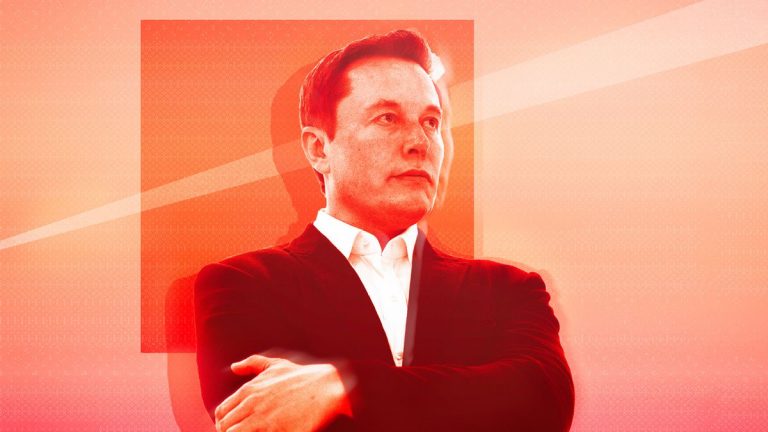
As the decade has gone on, the occurrence of Elon Musk events has increased, and a brief glance back at the timeline shows this isn’t just a psychological phenomenon: Elon really is Elonning more often.
Cast your memory back, if you will, to the reaches of Very Recent History. At the beginning of this decade, Tesla had just one car: the Roadster. SpaceX had not yet secured a commercial crew contract for NASA. Neuralink, the company attempting to create commercialized brain-machine interfaces, didn’t yet exist, nor did the Boring Company, Musk’s tunneling concern.
Back then, Musk was still best known for getting fired from PayPal. And while Tesla had built the Roadster in 2008, wowing car nerds with its acceleration, it was still a niche product. Plus, both SpaceX and Tesla nearly went bankrupt in 2008. So while it’s possible Musk was saying as much weird shit as he would say later on, he didn’t have the same kind of spotlight on him; the stakes were lower.
Then, in 2010, three significant Elon events occurred, which would set the stage for more to follow: in June, SpaceX launched the first version of the Falcon 9, and Tesla went public. In October, Tesla took occupancy of the former NUMMI factory in Fremont, California.
From here, the pace of Elon-related activity would only accelerate. Some of this was inevitable: SpaceX and Tesla were taking on new business challenges, launching new products (literally, in SpaceX’s case), and becoming more popular. That meant Musk’s pronouncements took on a new weight and received more media coverage. It also meant that Musk was trotting himself out more often: because Tesla doesn’t advertise, promoting the brand meant Musk had to serve as a celebrity hypeman.
SpaceX
After the initial 2010 launch of the Falcon 9, SpaceX became the first private company to dock at the International Space Station in May 2012. The Dragon spacecraft went on to be a major way that NASA delivered supplies to the ISS. By April 2015, SpaceX had flown seven missions to the space station. In 2014, NASA deepened its relationship with SpaceX, contracting the company to develop a version of its Dragon capsule for people.
Things began shifting in 2015. In December, SpaceX landed its first rocket. Before this, there’d been some skepticism about Musk’s idea of a reusable rocket as a possibility at all — and some skepticism still exists about whether it’s a reasonable cost-cutting measure. (Refurbishing a rocket is expensive.) But after this initial landing, SpaceX so routinely landed its first stages that people began to take them for granted. In December 2017, SpaceX launched and landed its first reused rocket. In 2018, SpaceX flew the first Falcon Heavy, sending Musk’s Tesla Roadster into orbit.
The launches did not go entirely smoothly. In June 2015, a Falcon 9 exploded a few minutes after launch when a strut failed in the rocket’s upper stage liquid oxygen tank. The second rocket blew up during fueling in September 2016 — and this time, there was a whiff of scandal, as sabotage was considered among the reasons for the explosion. This explosion was ultimately chalked up to a problem with the helium tanks, carbon fiber composites, and solid oxygen. The two explosions delayed SpaceX’s other planned launches as the company investigated to determine their causes. There was a third explosion in 2017, but this one didn’t slow the slate of flights since it was just an engine on a test stand. A fourth explosion happened in April 2019 when a test version of the Crew Dragon — the SpaceX vehicle meant for people — blew apart. Leaky valve, propellant, boom.
As SpaceX was flexing, the rocket launch market began to change. The commercial market for launching satellites into geostationary orbit was “very soft” in 2017 and 2018, SpaceX president Gwynne Shotwell said. That threw a wrench into SpaceX’s plans. In financial documents dating from 2015, which were obtained by The Wall Street Journal, SpaceX had projected more than 40 launches; there were actually 20. In 2019, SpaceX had estimated 52 launches — one every week — and there were, in fact, 12, with two more scheduled before the end of the year.
The slowing market for commercial satellites — and the smaller number of rockets needed to launch them — meant that SpaceX needed to retool its plans. Now, since SpaceX is a private company and doesn’t have to make its planning public, I can only speculate about what that entailed.
It may be why SpaceX dipped its toe into space tourism. In 2018, Musk announced that Yusaku Maezawa, a Japanese billionaire and founder of Zozotown, Japan’s largest online clothing retailer, will be the first private customer to ride around the Moon on the company’s future ship, which was rebranded from the Interplanetary Transport System to Starship. But betting on the billionaire might not be such a good idea since he tweeted in May that he was broke. SoftBank’s Yahoo Japan has since acquired Maezawa’s Zozo, an online fashion retailer, for $3.7 billion. So, presumably, the trip is still on.
SpaceX launched 60 of those satellites in May, and some of them have failed; a second launch in November sent up 60 more. The 2015 SpaceX financial estimates The Wall Street Journal got ahold of projected the Starlink business would dwarf the rocket launch business — and now, as a result of the slowed pace of launches, Starlink seems like a make-or-break business for SpaceX. (Again, this is all guesswork; it’s sort of hard to figure out what’s going on financially with a privately traded company.) In any event, in October, Musk tweeted that he was going to send a tweet using the Starlink system. “Whoa, it worked!!” he wrote.
If Starlink is successful, then the 2020s will truly be a new era for SpaceX: it will be a consumer business.
Tesla
Tesla’s initial public offering was in June 2010; the company raised $226.1 million during the first IPO of an American carmaker since Ford went public in 1956. Tesla badly needed the cash. The company had teetered on the edge of bankruptcy during the 2008 financial crisis. It had only one car, the Roadster, and it had never made a profit. This would all change over the course of a decade, and thanks to the ready availability of information on publicly traded companies, Tesla’s travails would prove easier to track than SpaceX’s.
For better and sometimes worse, this decade was the decade of the Tesla factory in Fremont, California. Every Tesla car built this decade came from Fremont. Without that plant, it seems unlikely Tesla would have been able to begin its deliveries of the Model S (in November 2012), the Model X (September 2015), or the Model 3 (July 2017).
Then there was the matter of the Model 3. At its unveiling in March 2016, Musk said the Model 3 would be his affordable, mass-market electric car: the base model would cost $35,000. A week after Tesla started taking orders, the company said 350,000 people had reserved the cars.
That raised some manufacturing questions since the Fremont factory had delivered fewer than 51,000 cars total in 2015. Part of Musk’s initial plans for making the Model 3 involved turning the factory into an “alien dreadnaught,” a machine to build cars, he said in a 2016 earnings call. This did not turn out as planned. In 2018, Musk admitted that Tesla relied too much on robots to build the Model 3s, which is why there were manufacturing delays leading up to the car’s introduction in July 2017.
But even after the Model 3 began production, there were bottlenecks. The Fremont factory was bursting at the seams. The catch-all for this, of course, was “production hell.” So Musk… built a tent in 2018. And that tent became another assembly line.
The Fremont plant was also where workers complained about their conditions. According to reporting from The Guardian, ambulances had been called more than 100 times to the Fremont factory between 2014 and 2017 for fainting spells, dizziness, seizures, abnormal breathing, and chest pains. “Hundreds more were called for injuries and other medical issues,” the report said. Another report from 2017 showed that Tesla workers were injured at a rate of double the injury average. Workers in the tent in 2019 said they were pressured to take shortcuts to hit production goals.
Worker unrest meant the possibility of a union arose; unions are common in car manufacturing, after all. A Tesla employee, Jose Moran, wrote a 2017 Medium post complaining at length about working conditions and saying that’s why he thought Tesla should unionize. At first, Musk claimed Moran was an employee of the United Automobile, Aerospace and Agricultural Implement Workers of America (UAW), rather than Tesla. By 2018, the National Labor Relations Board was involved, reviewing Musk’s tweets (“Why pay union dues & give up stock options for nothing?” he tweeted in May 2018), among other evidence. In September 2019, Tesla and Musk were found to have violated labor law.
Even as Fremont was the primary Tesla site, Musk’s manufacturing ambitions led to several new factories. The unfinished Gigafactory 1 opened in Nevada in July 2016; it was 14 percent complete at the time. The August 2016 acquisition of SolarCity would give Tesla what would later be known as Gigafactory 2. In January 2019, Tesla broke ground for the Shanghai Gigafactory; by October, Tesla claimed it was ready for production. A fourth Gigafactory is planned for Berlin.
The Gigafactories have also given rise to some controversy. In 2018, Business Insider reported that batteries at the Gigafactory were getting scrapped (or reworked) at a rate of 40 percent. The man who was blamed for the leak was an assembly line worker named Martin Tripp, and Musk characterized him as engaging in “extensive and damaging sabotage” in an email to staff, Bloomberg reported. Litigation between Tripp and Tesla is ongoing. A former security manager named Sean Gouthro alleges in a whistleblower report with the Securities and Exchange Commission that Tesla behaved unethically in its search for the leaker. Tesla maintains it terminated Gouthro for poor performance.
Then there’s Gigafactory 2. New York (the state, not the city) spent $958.6 million on the factory and wrote that down to about $75 million — though that figure doesn’t capture the plant’s economic value to the surrounding area, The Buffalo News reported. Some workers there have said they found the work environment hostile.
Of course, the 2016 SolarCity acquisition was more than just a factory; it was a new line of business and possibly a conflict of interest. (The shareholder lawsuits are still out there, and they allege SolarCity was going broke before the acquisition, and “conflicted fiduciaries” negotiated an inflated price on SolarCity shares. Tesla and Musk have denied these claims.) SolarCity’s founders are Lyndon and Peter Rive, Musk’s cousins. Musk was chairman of both companies when Tesla bought SolarCity; he was also SolarCity’s largest shareholder.
At the time, SolarCity was the biggest player in residential energy. Since then, it’s been passed by Sunrun and Vivint Solar, Marketwatch reported in June. Maybe that was because most of Tesla’s resources were being sucked up by Model 3 production, as Musk said in a deposition. (Tesla has said that the number of batteries supplied by Panasonic is a “fundamental constraint.”) Maybe people got tired of waiting for the Solar Roof, a product announced by Musk at the same time as the acquisition — which still hasn’t seriously surfaced as a consumer product three years later. It is perhaps also worth mentioning the hair-raising litigation from Walmart — now dropped — about a series of solar panel fires.
Energy storage and solar panels may be a Tesla business we see grow over the course of the next decade or so. After building the largest battery in the world — in Australia — to help buttress the electric grid, Tesla may soon be building an even bigger one in California. The company has also introduced a new industrial storage pack. In California, several energy companies have been cutting power to avoid wildfires, and those blackouts are unlikely to stop anytime soon. That may provide an opportunity for Tesla’s consumer energy business as well.
At times, the pressure from Tesla appeared to be getting the better of Musk. The most significant stress period occurred in August 2018. On August 7th, Musk tweeted: “Am considering taking Tesla private at $420. Funding secured.” By August 24th, Musk had abandoned this plan. Then, a month later, the SEC sued him over the “funding secured” tweet: “In truth and in fact, Musk had not even discussed, much less confirmed, key deal terms, including price, with any potential funding source,” prosecutors wrote in the complaint. Two days later, the suit was settled: Musk would step down as chairman of Tesla, and both he and Tesla would pay $20 million fines. Also, there was a provision about tweeting, which got relitigated this year because Musk will never log off.
In any event, Tesla carved out its first back-to-back quarterly profits in the last two quarters of 2018. In the second quarter of 2019, Tesla made and delivered the most cars in its history, though the company still posted a loss for the quarter. It made its first profit in 2019 during its third quarter. One consistent theme throughout Tesla’s existence has been skeptics who’ve said the business doesn’t seem sustainable. Despite the naysaying and some close calls, Tesla is still in the ring. With the Model Y (a compact SUV) and Cybertruck coming in the next decade, Tesla has the opportunity to prove naysayers wrong — or undergo another production hell. Strap yourself in because, whatever happens, it’s likely to be a fascinating ride.
Other businesses
Musk launched two new ventures this decade: Neuralink, a company for brain-machine interfaces, and the Boring Company, a tunnel-boring venture. The two companies appear to have much less day-to-day attention from Musk. At his Twitter defamation trial in December 2019, Musk described Tesla and SpaceX as occupying 95 percent of his time. Still, both ventures are worth mentioning at least in part because they seem to expand Musk’s science fiction-influenced worldview.
Neuralink was founded in 2016, about a decade after the first clinical report of a person using a brain-machine interface to move a cursor on a screen. Neuralink was publicly unveiled in 2017, and Musk gave more details on the company’s ambitions: to give people who are disabled a way to command computers as a compensatory aid, allow for telepathic communication, and graft human thought onto AI systems.
Well, Musk usually dreams big.
In 2019, we got some more details on the design of the Neuralink technology: flexible threads to be embedded in the brain. Also, a monkey has used the technology to “control a computer with its brain,” Musk announced, to the surprise of his team. The company is still in early stages, and biotechnology usually takes more than a decade from initial research to sale on the market, with lots of studies in between to help characterize the technology.
The Boring Company is moving faster, probably because it doesn’t require brain surgery. In January 2017, Musk tweeted about Los Angeles traffic “driving me nuts.” He said he had a new venture in mind: the Boring Company.
In 2019, Chicago got a new mayor, and, suddenly, the Boring Company project was placed on the back burner. But Las Vegas, which is no stranger to quixotic transit projects, stepped into the breach: the Las Vegas Convention and Visitors Authority entered into a $48.6 million contract with the Boring Company to build a “people mover.” That project broke ground in November 2019, and it’s expected to be completed by CES 2021.
Elon himself
Musk’s Twitter account exists in an ongoing state of epistemic uncertainty. Sometimes he tweets things that seem like jokes and aren’t — a lot of these things pertain directly to the Boring Company, which seems to be something of a catch-all for Musk’s whimsy — and sometimes he really is just joking. (I don’t think he’s going to build a volcano lair.)
There are, however, some more general things that Musk was up to during the 2010s, of which, the most significant were his involvement with OpenAI and the hyperloop.
The hyperloop was first revealed to the public in 2012, with more details following a year later. Musk said publicly that he had “no plans” to build his design, but that didn’t stop a lot of other people from forming hyperloop companies. The basic plans called for “pods” traveling at 800 miles per hour to send people quickly from San Francisco to Los Angeles. Musk did build a test track that’s about a mile long outside his SpaceX headquarters, and in 2015, he began hosting a pod-racing competition for students. These events seem to be largely hack-a-thons, which may also serve as recruiting pools for engineering talent. Next year, Musk says, the test track will have a curve. And an actual hyperloop may eventually be built in India.
There is also the matter of artificial intelligence. While many AI experts have come to believe that artificial intelligence is likely to be limited, Musk has warned about hyper-intelligent, human-hating AI: “we are summoning the demon,” he said in 2014. (As of 2018, he’s still anxious about it.) So Musk was one of the founders of OpenAI, which is meant to build friendly AI. The foundation initially raised about $1 billion from various tech companies and executives, including Musk. In February 2018, Musk stepped down from the foundation since there might be some conflicts between his attempts at Tesla to build self-driving cars and OpenAI’s work, but he said he will remain a donor. The CEO remains Sam Altman who was formerly the president of Y Combinator.
If this all seems a little far-fetched, there may be an explanation: “There’s a billion to one chance we’re living in base reality,” Musk said onstage in 2016. Musk has apparently done a great deal of thought about the possibility that we’re all living in a simulation, and “my brother and I agreed that we would ban such conversations if we were ever in a hot tub.” The notion of a “base reality” may be a reference to a 2003 hypothesis put forward by philosopher Nick Bostrom, though it appears a bit more certain than Bostrom’s line of thought. It is a view echoed by some computer scientists, though the most effective rebuttal I’ve seen is, essentially, “well, so what if we are? This is a distinction without a difference.”
Musk also poured $2 million into a satire company, Thud. In March 2018, Musk announced the venture on Twitter with some former Onion staffers on board who said at the time, “We can confirm that we have learned nothing from prevailing trends in media and are launching a brand-new comedy project.” By December 2018, however, Musk told the group that no further funding would come from him; the group then had six months to launch and figure out a monetization strategy before the money ran out. Ambitious projects, like DNA Friend, a 23andMe satire, were quickly rushed out the door. Thud was shuttered in May.
In somewhat less amusing news, Musk also stood trial for defamation in December 2019. The suit was brought by Vernon Unsworth who helped rescue a soccer team and their coach who’d been trapped in a cave in Thailand. Musk had also attempted to assist with the rescue, by building a “minisub,” with the notion that it could be used to ferry the children from the cave. In an interview with CNN, Unsworth said the tube was a “PR stunt” with “absolutely no chance of working” and that Musk could “stick his submarine where it hurts.” (Musk’s lawyers would later pressure Unsworth to apologize for some of the comments he made in this interview during the suit.) Musk then called him a “pedo guy” on Twitter.
There’s probably some stuff I’ve missed here, but that’s just because there’s so much stuff. It does seem, looking back, that the pace began to accelerate around 2015. One question I get most often about Musk — from friends, family members, neighbors, and my editors — is “Okay, but is this dude for real?” Well, the rockets are real, the cars are real, the Not-A-Flamethrower is real, and so is the tunnel starting in the SpaceX parking lot. The lawsuits are varying degrees of real. The timelines Musk gives himself on the products he makes are almost always wishful thinking, and not all of his ideas work in reality.
The rise of the social media influencer as a new form of celebrity in the 2010s seems to have suited Musk. He’s leaned heavily on YouTubers and, like many other influencers before him, engaged in a popular crossover event. He has a devoted army of fans, just like Taylor Swift or PewDiePie. Like most influencers, he seems to enjoy spectacle. And also like most influencers, he’s used social media — and his own celebrity — as a valuable form of marketing. That’s especially important for Tesla (which has arguably become the car brand for YouTubers) since Tesla doesn’t engage in paid advertisements. Sure, some Elon activity is decidedly spontaneous, but even that works in favor of the marketing since it makes his fans feel closer to him. I mean, how many big-deal CEOs besides Musk tweet about Rick and Morty, or engage with random followers? To borrow a turn of phrase from Jay Z: Elon Musk isn’t just a businessman; he’s a business, man.
Musk seems unlikely to stop Elonning anytime soon. We do not yet have the technology to predict cycles of Elon activity, thus allowing us to forecast heavy Elon seasons. I sincerely hope someone is working on this, but, until then, I suppose we’d all better keep an eye on his Twitter account: he appears more often there than anywhere else.
For investors who are saving for retirement, dividend stocks are a crucial building block—with reinvested payouts juicing returns during the preretirement phase and providing crucial income to retirees during the drawdown phase.
Indeed, the once-sleepy world of dividend investing is hot. With their attractive income and yields, dividend stocks not only offer solid returns in an era of ultralow bond yields that doesn’t appear to be ending soon, but also hold the promise of price appreciation. The S&P 500 index’s yield was recently around 1.9%, about even with that of the 10-year U.S. Treasury note—itself a common source of income for retirement savers.
Dividends also offer a number of advantages beyond income, one being that qualified dividend income is taxed as a capital gain and at a lower rate than ordinary income receives. The top federal capital-gains tax rate is 23.8%. Payouts can also help buffer volatility in tumultuous markets, providing returns even if a stock’s price goes down, and give a stock portfolio much-needed diversification. All of these attributes make dividend stocks an important investment for the diligent retirement saver.
“If done correctly, dividend-yielding stocks are the gifts that keep on giving,” says Lewis Altfest, CEO of Altfest Personal Wealth Management in New York.
Retirees’ need for dividend income—or income of any sort, really—has become particularly acute over the past 30 years or so, as companies have turned away from offering pensions that guarantee workers steady payouts during the course of their retirements. The corporate replacement for pensions, so-called defined-contribution plans like 401(k)s, instead put the onus for retirement saving on workers, and many of them are struggling to turn those savings into streams of retirement income.
Against this backdrop, many companies, policy makers, retirement researchers, and financial firms are trying to develop strategies and products that retirees can draw upon for income in retirement. Among the offerings and ideas: withdrawal mechanisms for workplace retirement-savings plans, “bridges” to maximize Social Security benefits, and an array of annuity offerings.
Now, a growing number of investors are seizing on dividend stocks as a cornerstone of their retirement-income strategy. For these savers, there are two schools of thought on how best to employ a dividend-stock strategy: total return or pure income.
With a total-return approach, investors focus on the growth in their portfolio over time with a variety of asset classes. Total return for stocks includes dividends as well as capital appreciation (or losses) to give investors the ability to take distributions from a combination of yield income and price appreciation. Capital preservation is not necessarily the main objective.
It is “based on a holistic view of the portfolio, matching the asset allocation to [the retiree’s] risk-return profile, [using] diversified investments and [minimizing] costs,” wrote Colleen Jaconetti, a senior investment analyst at Vanguard Group, in a 2016 research note.
With the pure income approach, investors incorporate dividend stocks and often an allocation to bonds to damp stock volatility. It essentially entails setting up a diversified portfolio and living off the dividends in retirement or using them to supplement income from other sources, such as Social Security or, for those who still have them, pensions. A $5 million portfolio with an average dividend yield of 2%, for instance, would throw off $100,000 a year before taxes.
But some caution is necessary when it comes to mixing dividends with retirement-income portfolios. Investors should be wary of chasing high-yielding stocks, for instance, given that a high yield is sometimes a signal of a stock with deeper problems.
“There’s always a reason for that extra yield, and it would be that there’s a lot of extra risk,” says Philip Huber, chief investment officer of Huber Financial Advisors in Chicago.
Investors also should take care not to create an unbalanced portfolio that’s too focused on stock income or too heavy in richly valued sectors, as utilities and consumer staples currently are.
And, especially when investing for the long term, investors with a myopic focus on yield might overlook some well-performing companies that don’t pay dividends, such as Facebook (ticker: FB) and Google parent Alphabet (GOOGL).
What’s more, dividends aren’t guaranteed. While companies typically strive to maintain dividend payments once they’ve been initiated, they can be cut in times of duress. During the financial crisis, for instance, General Electric cut its annual dividend from $1.24 a share to 40 cents. It’s now down to a token sum of four cents a share annually. (GE is a onetime dividend stalwart, with decades of consecutive payout increases until the first cut in 2009.)
Both the income and total-return approach can face problems if a retiree runs out of money and needs to tap principal too aggressively—no small worry considering that life expectancies have been increasing. According to the Center for Retirement Research at Boston College, the average 65-year-old retiree can now expect to spend about 20 years in retirement, up from 13 years in 1960.
Still, proponents of dividend stocks say that a well-executed strategy can provide income and capital appreciation that can stretch savings.
Jeremy Schwartz, global head of research at WisdomTree, says that on a real basis, which takes inflation into account, dividend stocks acquit themselves well relative to other kinds of assets and thus are valuable components of a diversified retirement portfolio. “Stocks are real assets that tend to see dividends and profits grow with inflation over time,” he says.
An attractive trait of dividend cash flow, Schwartz adds, is that it is much less volatile than stock-price movements are. He points out that the WisdomTree US Total Dividend exchange-traded fund (DTD), which weights its 878 holdings by expected dividend streams, recently yielded about 2.9%. Apple (AAPL), with its hefty dividend stream, has the largest weighting in the fund.
On top of that, the fund’s net share repurchase yield—that is, the stock buybacks as a percentage of the underlying holdings’ market capitalization—was 2.2%. That’s a combined shareholder yield of a little more than 5%.
“That’s a pretty attractive equity-risk premium,” Schwartz says, comparing the ETF’s 5% shareholder yield to the 0.21% for Treasury inflation-protected securities recently.
While experts note that not every stock has to pay a dividend in accumulating assets for retirement, they say dividends are a crucial factor in racking up total returns, which combine capital appreciation with reinvested dividends.
John Buckingham, editor of the Prudent Speculator newsletter and chief investment officer at AFAM Capital, agrees that the portion of a portfolio that’s designated to earn returns for five years out and beyond should be pretty much all in stocks, “provided that you have the discipline and patience to stick with it, and that’s a big caveat.”
“There’s just not a lot of excitement in bonds or other fixed-income type investments,” he adds. Dividends typically go up every year, “and that’s likely to increase as corporate profits grow.” Bond coupons, meanwhile, are often fixed.
TOTAL-RETURN STRATEGY
Huber, a proponent of total-return investing to build a retirement nest egg, advocates an approach in which portfolio assets are periodically rebalanced (from better-performing asset classes to underperformers, for example) and occasionally sold to supplement income for retirees.
“It’s hard to retire and live solely off the income of dividend-paying stocks and high-quality bonds,” he says.
He generally favors dividend-growth stocks, or ones that are regularly increasing their disbursements, over higher-yielding names. Dividend growers, he says, have “more of a quality bias” and are “more defensive in a downturn.”
Jaconetti, though, prefers holding a balance between those broad types of dividend stocks. “The markets are cyclical, and nobody really knows what’s going to happen,” she said in a recent interview.
She is skeptical of overweighting dividends, in part because traditional equity-income sectors such as utilities and consumer staples have been bid up, leading to higher stock valuations. Those sectors, and stocks, could be vulnerable to a selloff, their dividend support notwithstanding.
“Dividend-focused equities tend to display a significant bias toward value stocks,” she says. Until recently, value stocks had underperformed growth names for many years. “You may not realize you are changing the composition or risk profile of your portfolio if you are doing it for the sole purpose of cash flow.”
One fund that has had success with a total-return strategy: the Columbia Dividend Income fund (LBSAX). Its 10-year annual return of 12.2% places it in the top 15% of its Morningstar category. The fund recently had its biggest weighting in information-technology stocks (21%), followed by financials (19%) and industrials (14%). Its top holdings included JPMorgan Chase (JPM), which yields 2.8%; Microsoft (MSFT), 1.4%; Johnson & Johnson (JNJ), 2.9%; and Merck (MRK), 2.6%.
“We continue to focus on identifying companies with free-cash-flow and balance-sheet strength, which we believe becomes more important as the economic cycle progresses,” the managers wrote in their outlook following the third quarter.
DIVIDEND INCOME STRATEGY
Charles Lieberman, chief investment officer at Advisors Capital Management in Ridgewood, N.J., dislikes the total-return approach.
For starters, there’s the “sequence of returns problem,” which is a commonly cited concern among retirement researchers. If, say, an investor’s portfolio runs into a cluster of down years as retirement approaches, it can mean a much lower base of assets on which to generate income.
Making portfolio withdrawals to raise cash when the market is declining is particularly vexing to him, partly because it can mean tapping principal—something many investors are loath to do. “When the market goes down sharply, you have to sell off more assets,” Lieberman says. “When the market recovers, the portfolio is operating on a smaller base, and it potentially never recovers.”
The so-called safe annual distribution, or withdrawal, rate for a retirement portfolio is around 4%, says Lieberman. But even at that rate, he says, there’s a chance a retiree can run out of funds. (Many retirement researchers these days are encouraging a more fluid withdrawal rate.)
So one of his firm’s strategies aims to produce income that keeps up with inflation. The strategy typically has about 80% of its holdings in stocks, in many cases including higher-yielding master limited partnerships and real estate investment trusts, with the remaining 20% in fixed income and preferred shares. Since its inception in 2001, the strategy has had a net annual composite return of 6.8%.
One REIT that Lieberman holds is Medical Properties Trust (MPW), which develops and leases health-care facilities such as hospitals. It yields 5.2%.
Lieberman doesn’t worry about the notion that emphasizing income-producing stocks can lead to dangerous overweightings in value stocks. “I have sufficient knowledge to be able to make some judgments about what sectors—and what companies—can safely provide income,” he says. “I don’t feel like I am required to invest in every sector proportionally.”
David Blanchett, head of retirement research at Morningstar, says there are times when the income approach—even one that’s less diversified—makes sense in retirement.
“Portfolios focused on income are likely to be less diversified than their total-return counterparts, but tend to produce higher levels of income, and may be attractive alternatives to total-return strategies for investors focused on current consumption,” he wrote in a 2015 paper that he co-authored in the Journal of Portfolio Management.
DIY STRATEGIES
Many investors sort out these retirement-income strategies with the help of an advisor or wealth-management firm. But what about do-it-yourselfers?
One option that growing numbers of investors are pursuing is to assemble a portfolio of dividend-paying stocks. To properly execute this difficult and potentially expensive strategy, a lot of research is required to fully understand the companies and how durable their dividends are.
Among the dividend stocks that Buckingham thinks are undervalued—but that pay a yield greater than that of 30-year U.S. Treasuries—are Royal Caribbean Cruises (RCL), which yields 2.7%; Cisco Systems (CSCO), 3.1%; Amgen (AMGN), 2.6%; AT&T, 5.2%; KeyCorp (KEY), 3.9%; Synchrony Financial (SYF), 2.4%; and Prudential Financial (PRU), 4.3%. The 30-Year U.S. Treasury’s yield is about 2.3%.
“We are not buying dividend stocks just for the sake of dividends,” says Buckingham. “We’re seeking capital appreciation, as well.”
Instead of assembling a dividend-stock portfolio, a likely safer and less-expensive option is a mutual fund or a combination of funds. “A fund would be more efficient. They have the opportunity to buy on a larger scale,” Jaconetti says.
One of the top performers is the $39.5 billion Vanguard Dividend Growth fund (VDIGX), which reopened to new investors in August. Its annual expense ratio is 0.22%. Run by longtime manager Donald Kilbride, the fund aims to invest in high-quality and defensive companies. The fund’s top recent holdings included Coca-Cola (KO), Medtronic (MDT), and McDonald’s (MCD), and its benchmark is the Nasdaq US Dividend Achievers Select Index—whose members have raised their dividends for at least 10 straight years.
The fund has placed in the top 20% of its Morningstar peer group based on one-, three-, five-, and 15-year returns. Its 10-year annual return of 12.8% is in the top 30%.
That’s the kind of performance retirees can live with.
Whatever approach is used for retirement income, dividends should play a key role—but it’s important to understand where and how they fit in.
Corrections & Amplifications
An earlier version of this story was accompanied by a table that showed the 12-month yields, including capital-gains distributions, of 10 mutual funds. The table has been updated and now excludes those distributions.
There can be lengthy commutes, dress codes, annoying coworkers, unreasonable supervisors, taxing physical labor, insufficient vacation time, heavy workloads, and a lack of appreciation, among many other things.
Thus, it’s easy to dream of money just arriving, without our having to clock in to earn it. Fortunately, passive income streams don’t have to be a dream. There are many sources, with examples including REIT dividend income, residual money, real-estate investments, interest, and other income-generating assets. Here’s a look at 15 of them — see which opportunities could work for you.
1. Stock dividends
One of the simplest ways to enjoy passive income streams is to buy stock in healthy and growing companies that pay dividends. Better still, look for dividends that have been increased regularly at a good clip (many companies often hike their payouts annually) and that have room for further growth, as evidenced by a dividend payout ratio of around 70% or less. The payout ratio is the amount of the annual dividend divided by the trailing 12 months’ earnings per share. It reflects the portion of earnings being paid out in dividends. The lower the ratio, the more room for growth. A ratio above 100% means the company is paying out more than it earns, which isn’t too sustainable. Here are some examples of stocks you might consider and research further:
Stock
Recent dividend yield
AT&T
5.3%
National Grid
5%
Duke Energy
4.5%
Verizon Communications
4.5%
Pfizer
3.7%
Flowers Foods
3.5%
General Motors
3.4%
China Mobile
3%
Data source: Yahoo! Finance.
2. REIT dividends
Another kind of dividend to collect is from real estate investment trusts, or REITs. They’re companies that own real-estate-related assets, such as apartments, office buildings, shopping centers, medical buildings, storage units, and so on — and they are required to pay out at least 90% of their earnings as dividends. They aim to keep their occupancy rates high, collect rents from tenants, and then reward shareholders with much of that income. If you’re interested in real estate as a way to make money, check out these examples of REITs to consider as investments:
REIT
Property focus
Recent dividend yield
Iron Mountain
Document storage
6.6%
Welltower
Healthcare
5.9%
Realty Income
Retail
5%
Public Storage
Storage units
4.1%
Host Hotels and Resorts
Hotels
3.9%
Digital Realty Trust
Data centers
3.5%
Data source: Yahoo! Finance.
3. Stock appreciation
Another way to wring income out of stocks, even if they don’t pay dividends, is to buy stocks that you expect will appreciate in value over time and then, when you need income, sell some shares. If you have a fat portfolio of such stocks when you retire, you might sell some shares every year to create a cash stream for yourself. Studying and choosing the stocks that will perform very well for you is easier said than done, though, so if you don’t have the interest, skills, or time to become your own stock analyst, consider simply investing in a low-fee broad-market index fund or two, such as one based on the S&P 500. Here’s how much you might accumulate over several periods if your investments average 8% average annual growth:
Growing at 8% for …
$5,000 invested annually
$10,000 invested annually
$15,000 invested annually
10 years
$78,227
$156,455
$234,682
15 years
$146,621
$293,243
$439,864
20 years
$247,115
$494,229
$741,344
25 years
$394,772
$789,544
$1.2 million
30 years
$611,729
$1.2 million
$1.8 million
Calculations byauthor.
4. Interest
Among the many passive-income opportunities that exist, interest is a very popular one, along with dividends. Unfortunately, we’ve been living in an environment of ultra-low interest rates for many years now, so even a savings account with $100,000 in it might only grow by $1,000 or $2,000 per year. Interest rates seem to be rising, though, so take heart — and know that in many past years, bank accounts and CDs and bonds have paid rates of 5%, 8%, and even 10% or more.
5. Annuities
While stocks are terrific income producers, they can be volatile. Every few years, the stock market tends to stagnate or drop for a while before recovering, and that can be problematic if you were counting on your stocks having a certain value at a certain time. One way to lock in an income stream is by buying a fixed annuity (as opposed to variable or indexed annuities, which can have steep fees and overly restrictive terms). Annuity contracts will be more generous when interest rates are higher, but here’s how much income they might deliver at recent rates:
Person/people
cost
Monthly income
Annual income equivalent
65-year-old man
$100,000
$541
$6,492
70-year-old man
$100,000
$620
$7,440
70-year-old woman
$100,000
$579
$6,948
65-year-old couple
$200,000
$921
$11,052
70-year-old couple
$200,000
$1,019
$12,228
75-year-old couple
$200,000
$1,160
$13,920
Data source: immediateannuities.com.
6. Rental property income
Income-generating assets are another of many passive-income opportunities. A classic example is making money in real estate via owning rental properties. It can seem perfect: You buy an apartment building or house, rent it out, and then sit back and collect checks every month from your tenants. The reality isn’t always so rosy, though. For one thing, you’ll need to maintain and repair the property, as well as paying taxes on it and insuring it. It may not always be occupied, either. You may have trouble finding tenants, or finding tenants who pay their rent reliably. Some tenants may damage the property, and others may be hard to get rid of. You’ll be the one they call in the middle of the night if the roof is leaking, and you’ll have to clean and perhaps freshen up the property between tenants. You can outsource much of this to a property management company, but it will take a cut of your income, often about 10%.
7. Pay off debt
You might not think of paying down debt as an income-generating activity, but it kind of is. Think of it this way: If you owe $10,000 and are paying 20% interest on it, that’s $2,000 in interest payments annually. Ouch. Pay off that $10,000, though, and you’ll be keeping that $2,000 in your pocket. It’s very much like earning a guaranteed 20% return on the debt that you retire, and 20% annual returns are way more than you can expect from the stock market or elsewhere. Note that some credit cards may be charging you 25% or even 30% interest, so paying such debt off as soon as possible is a no-brainer financial goal.
8. Credit card rewards
Speaking of credit cards, if you don’t use them to rack up debt, you can instead use them to generate income streams for you — via their cash-back or rewards programs. Some cards offer flat-rate cash-back percentages up to about 2%. Others target certain kinds of spending or certain retailers. If you spend a lot at Amazon.com, for example, you can get a card that rewards you with 5% cash back there — which can really add up. (It’s not hard to spend $250 per month at Amazon, which is $3,000 per year — enough to earn $150 back.)
Other stores with associated credit cards include Target, Costco, Gap, Lowe’s, TJX, Toys R Us, and Wal-Mart. Many offer 3% to 5% in cash back or discounted prices, and many offer other perks, too, such as free shipping on items purchased at the sponsoring retailer, while others might let you return items without a receipt, or will donate money to charity whenever you use the card. If you travel a lot, you can use travel-related credit cards to rack up lots of points and rewards that can be used instead of cash, keeping more cash in your pocket.
9. Residual and royalty income
You can also generate residual and royalty income for yourself by producing things that might then pay you again and again. This isn’t 100% passive income, as there’s some initial work involved, but if all goes well, once you’ve done the work, you’ll be paid repeatedly over a possibly long period of time.
For example, you might take photos and have them available for a fee at sites such as shutterstock.com or istockphoto.com. Similarly, you can create and upload designs at sites such as zazzle.com and cafepress.com, where people can buy them imprinted on shirts, mugs, and so on. Similarly, if you write an e-book (which can be as short as 6,000 or so words), you might find that people are interested in buying it, perhaps via Amazon.com’s direct publishing service.
10. Sell stuff online
Speaking of selling stuff online, that’s another mostly passive way to generate income. You could generate an income stream for a while by clearing out your basement or attic and selling items on eBay or elsewhere. This can be especially effective with collections. If you have lots of games or jigsaw puzzles that are taking up space and not being used, they can be great sources of income. You might reap a lot by selling new and used clothing you don’t need.
11. Rent out space in your home
Not everyone is eager to do this, but consider renting out space in your home for extra income. You could take in a full-time boarder, for example, but you needn’t be that extreme. Instead, consider renting out an extra room via a service such as airbnb.com or homewaway.com. If you do so for just 20 nights a year and charge $100 per night, that’s $2,000 in pre-tax income! If your home is in a desirable spot, maybe you can rent out the whole house for just two weeks in the summer, charging $2,000 per week and collecting $4,000.
12. Lend money
Here’s an option that’s still unfamiliar to many people but that has been growing in popularity: Lending money on a peer-to-peer basis. A major website for this is lendingclub.com, where investors have earned returns in the neighborhood of 4% or more annually. You’ll be lending money to fellow individuals who have had trouble borrowing money through other avenues, and you can spread your dollars across many such folks to reduce the risk.
13. Refinance your mortgage
Refinancing your mortgage is a passive income generator? Yup, it sure can be. If you’re making monthly mortgage payments of $1,600 now, and you can reduce that to $1,300 per month by refinancing your home loan at a lower interest rate, you’ll keep $300 in your pocket each month. Of course, refinancing isn’t free — there are closing costs. Still, if you plan to stay in your home long enough to more than break even, refinancing is well worth it. As an example, if your closing costs are $6,000 and you’re saving $300 per month, you’ll break even in 20 months — less than two years!
14. Get a reverse mortgage
Refinancing may not be worth it to you, depending on your situation and interest rates, but maybe a reverse mortgage is just what you need. It’s typically an option well worth considering for those in or near retirement. A reverse mortgage is essentially a loan, with the amount borrowed not having to be repaid until you die, sell your home, or stop living in it (perhaps because you moved to a nursing home or died). At that time, the home can be sold to cover the debt — or your heirs can pay it off and keep the home. Reverse-mortgage income is often tax-free, which is another big plus. The amount you get can be delivered in monthly installments, providing very passive and reliable income in retirement.
15. Affiliate marketing
If you have a blog or some other property that has visitors, you might profit passively via affiliate advertising. For example, imagine that you write a blog about movies. You might review some books about movies, and then link to them on Amazon so you get a cut of the purchase price when anyone buys books through the links. If you blog about hiking, you might promote some hiking gear you recommend on the blog, again generating passive income if anyone buys any of it.
These are some of the main ways to earn passive income for yourself. There are others that you can find by doing further online exploration. (For example, you might agree to have your car wrapped in an advertising message and then collect cash just for driving around town in your own vehicle.)
Consider some of the ideas above, because the income they offer might significantly improve your retirement or help you achieve other important financial goals. Some of them might even turn out to be fun.
CLOSE
John Mackey, CEO of Whole Foods Market, an Amazon subsidiary, is a member of The Motley Fool’s board of directors. Selena Maranjian owns shares of Amazon, Costco Wholesale, National Grid, Realty Income, and Verizon Communications. The Motley Fool owns shares of and recommends Amazon, eBay, National Grid, and Verizon Communications. The Motley Fool recommends Costco Wholesale, Lowe’s, The TJX Companies, and Welltower. The Motley Fool has a disclosure policy.
The Motley Fool is a USA TODAY content partner offering financial news, analysis and commentary designed to help people take control of their financial lives. Its content is produced independently of USA TODAY.
Offer from the Motley Fool:The $16,122 Social Security bonus most retirees completely overlook If you’re like most Americans, you’re a few years (or more) behind on your retirement savings. But a handful of little-known “Social Security secrets” could help ensure a boost in your retirement income. For example: one easy trick could pay you as much as $16,122 more… each year! Once you learn how to maximize your Social Security benefits, we think you could retire confidently with the peace of mind we’re all after. Simply click here to discover how to learn more about these strategies.


:format(webp)/cdn.vox-cdn.com/uploads/chorus_image/image/65883038/acastro_191211_elon_decade_0001.0.jpg)


:format(webp):no_upscale()/cdn.vox-cdn.com/uploads/chorus_asset/file/13105921/000.png)
:format(webp):no_upscale()/cdn.vox-cdn.com/uploads/chorus_asset/file/6272895/model3times2-marked.0.jpg)
:format(webp):no_upscale()/cdn.vox-cdn.com/uploads/chorus_asset/file/16344705/1134883434.jpg.jpg)
:format(webp):no_upscale()/cdn.vox-cdn.com/uploads/chorus_asset/file/11565675/vpavic_180615_2677_0140.jpg)
:format(webp):no_upscale()/cdn.vox-cdn.com/uploads/chorus_asset/file/19086668/pacalin_190721_3581_0009.jpg)
:format(webp):no_upscale()/cdn.vox-cdn.com/uploads/chorus_asset/file/19484386/1186306983.jpg.jpg)