Home Blog Page 43

Chevron is writing down as much as $11 billion worth of assets, and it could cost the entire market

0
Chevron is writing down as much as $11 billion worth of assets, and it could cost the entire market

Chevron is writing down as much as $11 billion worth of assets, and it could cost the entire market.

Howard Silverblatt, senior index analyst at S&P Dow Jones Indices, said that depending on the final charge, it could reduce 2019’s fourth-quarter overall S&P 500 earnings by $1.32 per share.

That would represent a big chunk of the fourth quarter’s earnings as companies in the index are estimated to earn $40.40 a share in the current quarter, according to S&P Dow Jones. The whole S&P 500 is expected to earn $158.50 a share for the full year, according to estimates.

This is a big impact for the 24th-largest company in the index.

On Tuesday, Chevron said that the write-down of between $10 billion and $11 billion would be for the current quarter as the company revalues some of its assets, including shale gas production sites in Appalachia and deep-water projects in the Gulf of Mexico.

The nation’s second-largest oil company also announced a $20 billion capital spending budget for 2020, and said it was considering offloading some of its natural gas projects as prices continue to falter.

“We regularly take a look at our long-term outlook for commodity markets,” Chevron CEO Michael Wirth said Wednesday on CNBC’s “Squawk Box.”

“As we do that, we also look at our assets and we evaluate which assets will deliver the highest returns on investment for our shareholders … and the assets in the Northeastern U.S., along with some in Canada and other parts of the world simply don’t compete as well for our investment dollar as others do,” he added.

Last month, Chevron reported a 36% drop in third-quarter profit, hit by lower oil and gas prices and refining margins. It also warned higher costs would affect fourth-quarter results.

Chevron shares have gained 8% this year, outpacing the S&P energy sector‘s 4% rise.

Reuters and CNBC’s Jessica Bursztynsky and Michael Bloom contributed to this report.

Correction: An earlier version of the story said the write-down would reduce 2020 earnings. The Chevron charge is for this year. This version also adds updated estimates for 2019.

Click here to see the full story

S&P 500 Return Calculator, with Dividend Reinvestment

0
S&P 500 Return Calculator, with Dividend Reinvestment

Below is a S&P 500 return calculator with dividend reinvestment, a feature too often skipped when quoting investment returns. It has Consumer Price Index (CPI) data integrated, so it can estimate total investment returns before taxes.  It uses data from Robert Shiller, available here.

Also: Our S&P 500 Periodic Reinvestment calculator can model fees, taxes, etc.  The S&P 500 History Calculator lets you compare time periods. Also see our CAPE/Shiller PE calculator for valuation. For all our calculators, go to this page.

Editor: Last data is 12/16 Close

The S&P 500 Dividends Reinvested Price Calculator

One issue you run into a lot when you are discussing optimal savings strategies is the inability of people discussing their returns versus the S&P 500 to produce a fair comparison. They will say, for example, that the S&P 500 index was at the same level as it was at some time in the past – so therefore investing in the index was a waste of time.  Here’s the key to this S&P 500 return calculator:

  • S&P 500 Index Return – The total price return of the S&P 500 Index. So if it is at 1000 on the start and end date, this will be 0.
  • S&P 500 Index Annualized Return – The total price return of the S&P 500 index (as above), annualized. This number basically gives your ‘return per year’ if your time period was compressed or expanded to a 12 month timeframe.
  • S&P 500 Dividends Reinvested Index Return – The total price return of the S&P 500 if you had reinvested all of your dividends.
  • S&P 500 Dividends Reinvested Index Annualized Return – The total price return of the S&P 500 if you reinvested dividends. Again, it will annualize the return given above.
  • Inflation Adjusted (CPI)? – Whether the calculation you did is using CPI adjusted values provided by Shiller, or showing return before inflation. Hit the checkbox above the buttons to turn on or off the inflation adjustment.

Methodology of the S&P 500 Return Calculator

Professor Shiller lists his methodology on his site – all values internal to this tool use the values he provided (outside of the most recent month).

How do monthly S&P 500 prices work?

Note is that the month’s ‘Price’ isn’t the price on a particular day, but an average of closing prices. It answers “what did the average investor who invested randomly during the beginning month and sold randomly during the ending month do?”.

Let me say that again in a different way: other than the most recent month, which is tied to one closing price (and listed in the editor note at the top of the page), the month DOES NOT correspond to an individual day.  

It’s a guess at an average investor’s price basis (or sale price) if they bought (or sold) “at some point” in the month.

Also, important (since it comes up often in the comments): because it isn’t an individual date, that means when you’re trying to compute yearly returns, you need to be careful to pick twelve months – so, if you were interested in the annual return of 2013, you would pick Jan-2013 to Jan-2014 or Dec-2012 or Dec-2013 to get roughly 12 months.  

If you want exact dates, you will have to look elsewhere, perhaps at the products S&P has on their index site.

How do dividend prices work?

To calculate the ‘dividend reinvested’ price index:

  • Take the trailing twelve month dividend yield reported in any month of Shiller’s data.
  • Divide by 12 to get an approximate count of dividends paid out in a month.
  • Calculate how many ‘shares’ of the S&P 500 index you can buy.
  • Run a cumulative count from your start to your chosen end date.

Is this completely accurate? No, but it would be nigh impossible to go back and calculate exact S&P 500 payout dates and figure out what the index was trading at on that date. Deal with it – over a long enough period the dividends will roughly balance out.

Also, transaction fees and management costs aren’t included, which would come out of a ‘real’ investor’s return.

Other Calculators and Other Ways to See S&P 500 Historical Return Data

We also present this data from the perspective of average return over various time periods

(We did an analysis of Donald Trump’s net worth vs. investing in the S&P 500). 

Implications of the S&P 500 Calculator

Does it mean a lot to include reinvested dividends? Well, yes.

Consider the following – in July 1999 Shiller’s data has the S&P 500 at 1380.99.

In April 2012? 1386.43. If you only used the price return of the S&P 500 you’d appear to have made a .394% gain, when, dividends reinvested, it was more like a 26.253%% gain.

It seems shabby, but the effect is much more pronounced over longer periods of time. Consider from January 1950 until April 2012 the return was 8,182.464% for the index price and a whopping 66226.545% for the dividends reinvested index. In short? Since 1950, roughly 89% of your gains would have come from reinvesting your dividends.

(Still think it’s shabby?)

Thank Yous

To Robert Shiller for posting his data publicly.
To Ken Faulkenberry at Arbor Investment Planner for finding an error with the dividend calculation in the first tool release (fixed in 2012).

Click here to see the full story

Stock Markets Failed To Rally On China Trade Deal, Here’s Why

0
Stock Markets Failed To Rally On China Trade Deal, Here’s Why

Topline: Although the U.S. and China have finally agreed on an initial deal that’s expected to defuse the 19-month-long trade war and result in a rollback of both existing and scheduled tariffs, the stock market didn’t surge on the news. Instead, markets ended the day largely flat: The S&P 500 finished the day up by less than 0.008%, while the Dow Jones Industrial Average rose 0.012%. 

Here’s why stocks didn’t make headway on Friday’s trade news, according to market experts:

  • The market may have already priced in expectations for an agreement prior to Friday: “Stocks already ran up 7% in just the past two months alone on the belief that a deal would be signed,” notes Chris Zaccarelli, chief investment officer at Independent Advisor Alliance.
  • Some experts remain wary: “The devil remains in the details,” points out Bankrate senior economic analyst Mark Hamrick. “We await further word on purported aspects of the agreement including purchases of U.S. farm goods, intellectual property protections, technology transfers and access to China’s financial sector.”
  • “Investors are right to be skeptical,” says Joseph Brusuelas, RSM chief economist. “There’s a limited framework to the deal, since both sides just wanted to agree and avoid the looming tariff deadline on December 15th.”
  • “Contrary to what many believed—and were told in news stories—there is no immediate tariff relief, just an agreement to eventually rollback tariffs later as phase two negotiations progress,” Zaccarelli points out.
  • “I’m still suspicious of a major rollback on existing tariffs,” Nicholas Sargen, economic consultant at Fort Washington Investment Advisors, similarly argues. “Don’t rule out a selective rollback, since Trump needs to maintain bargaining power—he has to keep his powder dry.”

Crucial quote: “Is this deal enough to give the US economy an added lift? I doubt it because to get that added lift we need businesses to ramp up capital spending—and they’re going to stay on the sidelines until there’s greater clarity and less uncertainty,” Sargen says. “If trade uncertainty was behind us, we’d have gotten a bigger pop in the market.”

What to watch for: “Both sides need to figure out translation and legal framework first—and if they don’t come to an agreement on that this deal could fall apart very quickly,” Brusuelas says. “We’ll have to see if it survives the weekend and into next week.”

Key background: Officials from both sides have been working tirelessly to hammer out a deal ahead of the looming December 15 tariff deadline. Reports came in on Thursday that negotiators had agreed to terms, and President Trump signed off on them later in the day. Wall Street cheered the good news, sending the stock market to new record highs, though the market’s reaction was notably more tempered on Friday, despite further confirmations that an agreement had been reached.

Click here to see the full story
Stock Market 2020: A 10% correction could be coming, Wells Fargo warns

0
Stock Market 2020: A 10% correction could be coming, Wells Fargo warns

As the end of the year and the decade approaches, Wall Street strategists have been delivering their expectations about where the stock market will close out 2020.

The next year will bring with it myriad market-moving events, including the 2020 presidential elections and next phases in U.S.-China trade relations. Market pundits across Wall Street have each delivered their ideas for how these and other catalysts will shape equity markets in 2020.

Their theses come as stocks have flirted with fresh record highs time and again in the fourth quarter of 2019, as global growth concerns receded from a fever pitch earlier this year. As of mid-November, the S&P 500 was up more than 23% for the year-to-date.

Here’s a summary of what some of Wall Street’s top strategists are telling their clients for next year, updated as new 2020 views become available.

Wells Fargo (Target: 3,388; EPS: $166) –  Recession risks in the rearview mirror, but a correction could be coming

Over the past couple months, strategists’ expectations for a 

Read more from Emily:

Follow Yahoo Finance on TwitterFacebookInstagramFlipboardLinkedIn, and reddit.

Find live stock market quotes and the latest business and finance news

Click here to see the full story
IBM’s Watson Was Supposed to Change the Way We Treat Cancer. Here’s What Happened Instead.

0
IBM’s Watson Was Supposed to Change the Way We Treat Cancer. Here’s What Happened Instead.
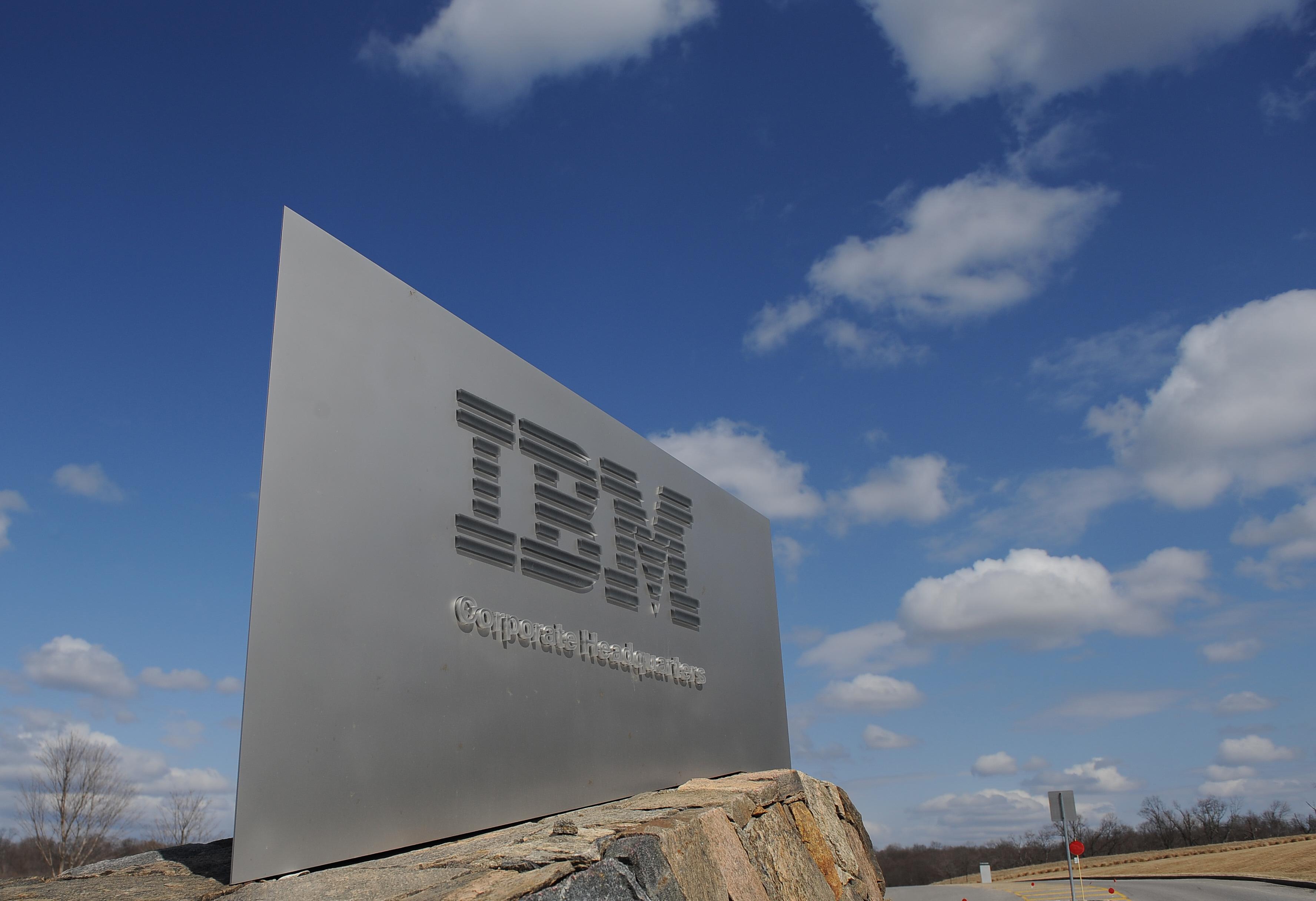
IBM corporate headquarters in Armonk, New York.

IBM corporate headquarters in Armonk, New York.

STAN HONDA/Getty Images

What if artificial intelligence can’t cure cancer after all? That’s the message of a big Wall Street Journal post-mortem on Watson, the IBM project that was supposed to turn IBM’s computing prowess into a scalable program that could deliver state-of-the-art personalized cancer treatment protocols to millions of patients around the world.

Watson in general, and its oncology application in particular, has been receiving a lot of skeptical coverage of late; STAT published a major investigation last year, reporting that Watson was nowhere near being able to live up to IBM’s promises. After that article came out, the IBM hype machine started toning things down a bit. But while a lot of the problems with Watson are medical or technical, they’re deeply financial, too.

IBM is shrinking: In 2011, when the company first introduced the idea that Watson might be able to one day cure cancer, its revenues were $107 billion. They’ve gotten smaller every year since, ending up at $79 billion in 2017. That presents enormous problems for any CEO, who’s generally charged with growing the company, or, failing that, growing the stock price.

It’s very hard to keep a stock price growing in a company where revenues are falling, because those companies tend to be valued on a multiple of revenues—and that multiple itself will fall. If IBM went from being worth, say, 3 times revenues in 2011 to 2 times revenues in 2017, then its market capitalization would have shrunk by more than 50 percent.

This hasn’t happened, however, because IBM has to some degree counteracted the negative forces and kept its stock price steady through two main strategies. The first is communications: If you can persuade the markets that you’re going to get bigger rather than smaller, then your multiples will grow and your shares will rise. IBM pursued this strategy by hyping Watson long before it was really ready for prime time. If the markets believed that IBM was capable of curing cancer, then they would bid up the shares in the expectation of a major revenue boost in the near future.

The second strategy for shoring up a stock price in the face of declining revenues is basic financial engineering, in the form of share buybacks. If you buy back a large number of shares in the open market, then your share price can rise even as your market capitalization falls. The downside of that strategy is that the more money you spend on buybacks, the less money you have to invest in growth.

As the STAT article put it:

“IBM ought to quit trying to cure cancer,” said Peter Greulich, a former IBM brand manager who has written several books about IBM’s history and modern challenges. “They turned the marketing engine loose without controlling how to build and construct a product.”

Greulich said IBM needs to invest more money in Watson and hire more people to make it successful. In the 1960s, he said, IBM spent about 11.5 times its annual earnings to develop its mainframe computer, a line of business that still accounts for much of its profitability today.

If it were to make an equivalent investment in Watson, it would need to spend $137 billion. “The only thing it’s spent that much money on is stock buybacks,” Greulich said.

It’s not that IBM hasn’t invested boatloads in Watson; it has. But while six years and billions of dollars is a lot of time and money for a Silicon Valley startup, it’s a pretty normal expenditure in the world of medical trials, most of which fail.

What’s more, when it comes to artificial intelligence, IBM is competing with rivals like Amazon and Alphabet—companies that are still growing fast, that see no need to buy back their shares, and that similarly see no need to hype their A.I. achievements before they’re really ready for the spotlight. Watson is great at publicity stunts—no article about it is complete without the requisite mention of the time it won Jeopardy (even, it seems, this one)—but A.I. is a very tough nut to crack, and one where the top computer scientists are in incredibly high demand. Those scientists aren’t going to the company with the best press, they’re going to the companies with the best A.I., and the best science. Ask anybody in A.I. about Watson, and you’ll be told in no uncertain terms that they’re an also-ran in an incredibly competitive space.

The biggest hope for A.I. in oncology, then, is not that Watson is somehow going to get vastly better. Rather, it’s that Alphabet or someone else has been quietly building a game-changing A.I. without over-hyping it in advance. It’s still possible that A.I. might be able to do amazing things in the world of oncology. Just don’t expect those advances to come from Watson.

Click here to see the full story