Shane Parrish was a cybersecurity expert at Canada’s top intelligence agency and an occasional blogger when he noticed something curious about his modest readership six years ago: 80 percent of his followers worked on Wall Street.
The blog was meant to be a method of self-improvement, helping Mr. Parrish deal with a job whose pressures had increased with the growing threat of global hacking. But his lonely riffs — on how learning deeply, thinking widely and reading books strategically could improve decision-making skills — had found an eager audience among hedge fund titans and mutual fund executives, many of whom were still licking their wounds after the financial crisis.
“People just found us,” Mr. Parrish said. “We became a thing on Wall Street.”
His website, Farnam Street, urges visitors to “Upgrade Yourself.” In saying as much, Mr. Parrish is promoting strategies of rigorous self-betterment as opposed to classic self-help fare — which appeals to his overachieving audience in elite finance, Silicon Valley and professional sports. His many maxims cite Ralph Waldo Emerson, Bertrand Russell and even Frank Zappa. (“A mind is like a parachute. It doesn’t work if it is not open.”)
Today, Mr. Parrish’s community of striving financiers is clamoring for more of him. That means calling on him to present his thoughts and book ideas to employees and clients; attending his regular reading and think weeks in Hawaii, Paris and the Bahamas; and in some cases hiring him to be their personal decision-making coach.
“These guys are driven to get that incremental edge — they are competitive, gladiatorial in that respect,” said Mr. Parrish, 39. “We are trying to get people to ask themselves better questions and reflect. If you can do that, you will be better able to handle the speed and variety of changing environments.”
To do that, Mr. Parrish advises investors like Scott Miller, the founder of Greenhaven Road Capital, to disconnect from the noise and read deeply.
“I will leave my computer and go into a separate room to read,” said Mr. Miller, an early sponsor of Farnam Street who is currently reading “Atomic Habits: An Easy and Proven Way to Build Good Habits and Break Bad Ones,” by James Clear. “It feels weird to do this in the middle of the day — but I do it.”
Mr. Parrish’s site has drawn the attention of some of the biggest names in finance. Dan Loeb, one of the more prominent hedge fund executives on Wall Street, is a big fan. And Ray Dalio of Bridgewater, the world’s largest hedge fund, recently did a podcast with him.
“Shane is a special person,” Mr. Loeb said via email.
Few Wall Street obsessions surpass the pursuit of an investment edge. In an earlier era, before computers and the internet, this advantage was largely brain power: Warren Buffett plucking a nugget from an annual report or George Soros making a seismic bet against a currency.
Today, information is just another commodity. And the edge belongs to algorithms, data sets and funds that track indexes and countless other investment themes. This has been devastating for hedge fund and mutual fund managers who make their living trying to outsmart the stock market.
With their business models under attack, they are searching for answers. And Mr. Parrish has a simple solution: reading, reflection and lifelong learning.
“These days, if you are not getting better you are falling behind,” said Mr. Parrish, who is reading “The Laws of Human Nature,” an examination of human behavior that draws on examples of historical figures by Robert Greene. “Reading is a way to consume people’s experiences, to learn something timeless and then apply it to your life.”
Chuck Royce, the founder and former chief executive officer of Royce mutual funds, who oversees $4 billion in investments, said he stumbled on Mr. Parrish’s site and related to it immediately.
Mr. Royce developed a reputation as one of the industry’s most astute fund managers, specializing in small, high-quality companies in the 1970s. But in the recent period of low interest rates, his main mutual fund’s performance has suffered.
“I failed to understand that in this period of zero rates, inferior companies would outperform high-quality companies,” said Mr. Royce, who was part of a group that spent a long weekend talking books and big ideas with Mr. Parrish in Hawaii two years ago.
Mr. Royce has embraced Mr. Parrish’s core principles. He gets up at 5:30 every morning to do his daily reading, which currently includes “Thinking in Bets: Making Smarter Bets When you Don’t Have All the Cards” by Annie Duke, a former poker champion — and a big favorite among investors these days. At the office, Mr. Royce works from a couch strewn with papers. His Bloomberg terminal is in another room.
“It is all about habits,” Mr. Royce said. “Setting goals is easy — but without good habits you are not getting there.”
Some executives have long sought insight from the printed page — and not just in the business section. Emmanuel Roman, the chief executive officer of the bond giant Pimco — who is reading “On Grand Strategy,” an assessment of the decisions of notable historical leaders by the Pulitzer Prize-winning biographer John Lewis Gaddis — called reading “a pure passion.” And Lloyd Blankfein, the chairman of Goldman Sachs, has talked up the benefits of reading books, especially those not related to economics or finance.
Mr. Parrish is an unlikely guru, a computer scientist from Halifax, Nova Scotia, who seems bemused by his sudden cachet. On a recent swing through New York to meet with clients, Mr. Parrish was dressed in a T-shirt and shorts and carried a worn backpack. Slight and balding, he looked more like an unhurried graduate student than a counselor to some of the wealthiest executives on Wall Street.
Mr. Parrish joined the Communications Security Establishment, a division of Canada’s Defence Department, straight out of college. His first day was Aug. 28, 2001, and he was soon promoted in the tumult that followed the Sept. 11 attacks. Suddenly, he was managing a large staff at the age of 24.
Wanting to improve his decision-making skills, Mr. Parrish found inspiration in Charlie Munger — Warren Buffett’s longtime investment partner. Mr. Parrish quickly became an acolyte, drawn to Mr. Munger’s thoughts on multidisciplinary thinking and mental models.
He pored over Berkshire Hathaway annual reports and became a regular attendee of Mr. Buffett’s yearly meetings in Omaha. The name of his site is another tribute to the billionaire investor: Berkshire Hathaway’s address in Omaha is 3555 Farnam Street.
Last year, Mr. Parrish left intelligence work to tend to the site full time. He would not disclose how much his various projects were making. Farnam Street now consists of book lists, essays, podcasts and a vibrant social network — all of which are anchored by Mr. Parrish’s self-improvement musings. There are also branded goodies to be had, such as a decision-making journal and a Farnam Street thinking cap.
Some 190,000 people have signed up to Brain Food, his free weekly newsletter. Mr. Parrish’s more dedicated followers pay $250 a year to become part of his “knowledge community” — a premium site with a private discussion forum and additional content. They have flocked to his social network, trading book ideas and meet-up suggestions in Toronto, Dubai and London.
James Aitken, an independent investment adviser in London who counsels some of the world’s largest investors, was among the readers that came upon Mr. Parrish in 2012. Since then, Mr. Aitken has revamped his work habits, pushing himself to disconnect from all his screens and read books — ideally for at least two hours a day.
“He is so indispensable to me that, beyond becoming a part of his network, I will occasionally write him a check at the end of the year,” Mr. Aitken said.
Mr. Aitken now pushes his clients to increase the time they spend reading and thinking away from their screens. Twice a year he sends out a list of books — including history, biography, finance and economics, self-help, and more — from which clients can choose a number of books as gifts. He has sent out about 2,300 over the past 10 years.
“Every world-class investor is questioning right now how they can improve,” he said. “So, in a machine-driven age where everything is driven by speed, perhaps the edge is judgment, time and perspective.”
ProPublica is a nonprofit newsroom based in New York. Sign up for ProPublica’s Big Story newsletter to receive stories like this one in your inbox as soon as they are published.
On June 30, 2016, an auto-parts magnate received the kind of news anyone would dread: The Internal Revenue Service had determined he had engaged in abusive tax maneuvers. He stood accused of masking about $5 billion in income. The IRS wanted over $1.2 billion in back taxes and penalties.
The magnate, Georg Schaeffler, was the billionaire scion of a family-owned German manufacturer and was quietly working as a corporate lawyer in Dallas. Schaeffler had extra reason to fear the IRS, it seemed. He wasn’t in the sights of just any division of the agency but the equivalent of its SEAL Team 6.
In 2009, the IRS had formed a crack team of specialists to unravel the tax dodges of the ultrawealthy. In an age of widening inequality, with a concentration of wealth not seen since the Gilded Age, the rich were evading taxes through ever more sophisticated maneuvers. The IRS commissioner aimed to stanch the country’s losses with what he proclaimed would be “a game-changing strategy.” In short order, Charles Rettig, then a high-powered tax lawyer and today President Donald Trump’s IRS commissioner, warned that the squad was conducting “the audits from hell.” If Trump were being audited, Rettig wrote during the presidential campaign, this is the elite team that would do it.
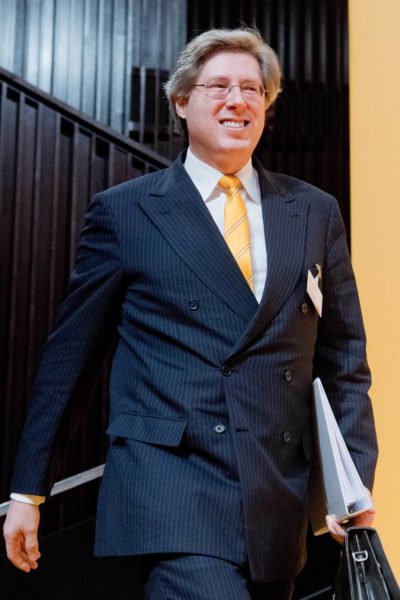
Georg Schaeffler faced a $1.2 billion tax bill after his company restructured a huge debt. (Julian Stratenschulte/picture alliance via Getty Images)
The wealth team embarked on a contentious audit of Schaeffler in 2012, eventually determining that he owed about $1.2 billion in unpaid taxes and penalties. But after seven years of grinding bureaucratic combat, the IRS abandoned its campaign. The agency informed Schaeffler’s lawyers it was willing to accept just tens of millions, according to a person familiar with the audit.
How did a case that consumed so many years of effort, with a team of its finest experts working on a signature mission, produce such a piddling result for the IRS? The Schaeffler case offers a rare window into just how challenging it is to take on the ultrawealthy. For starters, they can devote seemingly limitless resources to hiring the best legal and accounting talent. Such taxpayers tend not to steamroll tax laws; they employ complex, highly refined strategies that seek to stretch the tax code to their advantage. It can take years for IRS investigators just to understand a transaction and deem it to be a violation.
Once that happens, the IRS team has to contend with battalions of high-priced lawyers and accountants that often outnumber and outgun even the agency’s elite SWAT team. “We are nowhere near a circumstance where the IRS could launch the types of audits we need to tackle sophisticated taxpayers in a complicated world,” said Steven Rosenthal, who used to represent wealthy taxpayers and is now a senior fellow at the Tax Policy Center, a joint venture of the Urban Institute and Brookings Institution.
Because the audits are private — IRS officials can go to prison if they divulge taxpayer information — details of the often epic paper battles between the rich and the tax collectors are sparse, with little in the public record. Attorneys are also loath to talk about their clients’ taxes, and most wealthy people strive to keep their financial affairs under wraps. Such disputes almost always settle out of court.
But ProPublica was able to reconstruct the key points in the Schaeffler case. The billionaire’s lawyers and accountants first crafted a transaction of unusual complexity, one so novel that they acknowledged, even as they planned it, that it was likely to be challenged by the IRS. Then Schaeffler deployed teams of professionals to battle the IRS on multiple fronts. They denied that he owed any money, arguing the agency fundamentally misunderstood the tax issues. Schaeffler’s representatives complained to top officials at the agency; they challenged document requests in court. At various times, IRS auditors felt Schaeffler’s side was purposely stalling. But in the end, Schaeffler’s team emerged almost completely victorious.
His experience was telling. The IRS’ new approach to taking on the superwealthy has been stymied. The wealthy’s lobbyists immediately pushed to defang the new team. And soon after the group was formed, Republicans in Congress began slashing the agency’s budget. As a result, the team didn’t receive the resources it was promised. Thousands of IRS employees left from every corner of the agency, especially ones with expertise in complex audits, the kinds of specialists the agency hoped would staff the new elite unit. The agency had planned to assign 242 examiners to the group by 2012, according to a report by the IRS’ inspector general. But by 2014, it had only 96 auditors. By last year, the number had fallen to 58.
The wealth squad never came close to having the impact its proponents envisaged. As Robert Gardner, a 39-year veteran of the IRS who often interacted with the team as a top official at the agency’s tax whistleblower office, put it, “From the minute it went live, it was dead on arrival.”
Most people picture IRS officials as all-knowing and fearsome. But when it comes to understanding how the superwealthy move their money around, IRS auditors historically have been more like high school physics teachers trying to operate the Large Hadron Collider.
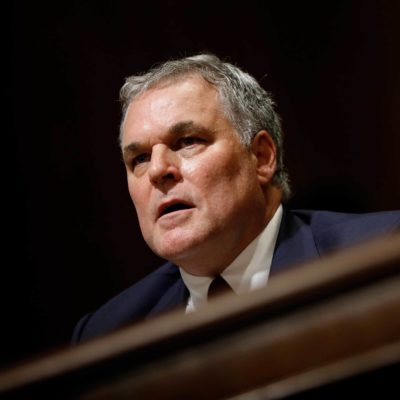
Charles Rettig, commissioner of the Internal Revenue Service, said if any group were auditing Donald Trump, it would be the Global High Wealth team. (Aaron P. Bernstein/Getty Images)
That began to change in the early 2000s, after Congress and the agency uncovered widespread use of abusive tax shelters by the rich. The discovery led to criminal charges, and settlements by major accounting firms. By the end of the decade, the IRS had determined that millions of Americans had secret bank accounts abroad. The agency managed to crack open Switzerland’s banking secrecy, and it recouped billions in lost tax revenue.
The IRS came to realize it was not properly auditing the ultrawealthy. Multimillionaires frequently don’t have easily visible income. They often have trusts, foundations, limited liability companies, complex partnerships and overseas operations, all woven together to lower their tax bills. When IRS auditors examined their finances, they typically looked narrowly. They might scrutinize just one return for one entity and examine, say, a year’s gifts or income.
Belatedly attempting to confront improper tax avoidance, the IRS formed what was officially called the Global High Wealth Industry Group in 2009. “The genesis was: If you think of an incredibly wealthy family, their web of entities somehow gives them a remarkably low effective tax rate,” said former IRS Commissioner Steven Miller, who was one of those responsible for creating the wealth squad. “We hadn’t really been looking at it all together, and shame on us.”
The IRS located the group within the division that audits the biggest companies in recognition of the fact that the finances of the 1 percent resemble those of multinational corporations more than those of the average rich person.
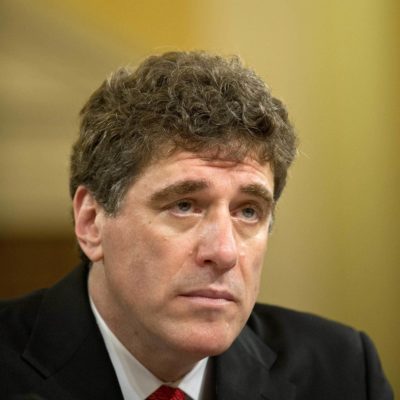
Former IRS Commissioner Steven Miller tried to fix the agency’s approach to auditing the ultrawealthy. (Nicholas Kamm/AFP/Getty Images)
The vision was clear, as Doug Shulman, a George W. Bush appointee who remained to helm the agency under the Obama administration, explained in a 2009 speech: “We want to better understand the entire economic picture of the enterprise controlled by the wealthy individual.”
It’s particularly important to audit the wealthy well, and not simply because that’s where the money is. That’s where the cheating is, too. Studies show that the wealthiest are more likely to avoid paying taxes. The top 0.5 percent in income account for fully a fifth of all the underreported income, according to a 2010 study by the IRS’ Andrew Johns and the University of Michigan’s Joel Slemrod. Adjusted for inflation, that’s more than $50 billion each year in unpaid taxes.
The plans for the wealth squad seemed like a step forward. In a few years, the group would be staffed with several hundred auditors. A team of examiners would tackle each audit, not just one or two agents, as was more typical in the past. The new group would draw from the IRS’ best of the best.
That was crucial because IRS auditors have a long-standing reputation, at least among the practitioners who represent deep-pocketed taxpayers, as hapless and overmatched. The agents can fritter away years, tax lawyers say, auditing transactions they don’t grasp. “In private practice, we played whack-a-mole,” said Rosenthal, of the Tax Policy Center. “The IRS felt a transaction was suspect but couldn’t figure out why, so it would raise an issue and we’d whack it and they would raise another and we’d whack it. The IRS was ill-equipped.”
The Global High Wealth Group was supposed to change that. Indeed, with all the fanfare at the outset, tax practitioners began to worry on behalf of their clientele. “The impression was it was all going to be specialists in fields, highly trained. The IRS would assemble teams with the exact right expertise to target these issues,” Chicago-based tax attorney Jenny Johnson said.
The new group’s first moves spurred resistance. The team sent wide-ranging requests for information seeking details about their targets’ entire empires. Taxpayers with more than $10 million in income or assets received a dozen pages of initial requests, with the promise of many more to follow. The agency sought years of details on every entity it could tie to the subject of the audits.
In past audits, that initial overture had been limited to one or two pages, with narrowly tailored requests. Here, a typical request sought information on a vast array of issues. One example: a list of any U.S. or foreign entity in which the taxpayer held an “at least a 20 percent” interest, including any “hybrid instruments” that could be turned into a 20 percent or more ownership share. The taxpayer would then have to identify “each and every current and former officer, trustee, and manager” from the entity’s inception.
Taxpayers who received such requests recoiled. Attacking the core idea that Shulman had said would animate the audits, their attorneys and accountants argued the examinations sought too much information, creating an onerous burden. The audits “proceeded into a proctology exam, unearthing every aspect of their lives,” said Mark Allison, a prominent tax attorney for Caplin & Drysdale who has represented taxpayers undergoing Global High Wealth audits. “It was extraordinarily intrusive. Not surprisingly, these people tend to be private and are not used to sharing.”
Tax practitioners took their concerns directly to the agency, at American Bar Association conferences and during the ABA’s regular private meetings with top IRS officials. “Part of our approach was to have private sit-downs to raise issues and concerns,” said Allison, who has served in top roles in the ABA’s tax division for years. We were “telling them this was too much, unwieldy and therefore unfair.” Allison said he told high-ranking IRS officials, “You need to rein in these audit teams.”
For years, politicians have hammered the IRS for its supposed abuse of taxpayers. Congress created a “Taxpayer Bill of Rights” in the mid-1990s. Today, the IRS often refers to its work as “customer service.” One result of constant congressional scrutiny is that senior IRS officials are willing to meet with top tax lawyers and address their concerns. “There was help there. They stuck their necks out for me,” Allison said.
The IRS publicly retreated. Speaking at a Washington, D.C., Bar Association event in February 2013, a top IRS official, James Fee, conceded the demands were too detailed and long, telling the gathering that the agency has “taken strides to make sure it doesn’t happen again.” The Global High Wealth group began to limit its initial document requests.
The lobbying campaign, combined with the lack of funding for the group, took its toll. One report estimated that the wealth team had audited only around a dozen wealthy taxpayers in its first two and a half years. In a September 2015 report, the IRS’ inspector general said the agency had failed to establish the team as a “standalone” group “capable of conducting all of its own examinations.” The group didn’t have steady leadership, with three directors in its first five years. When it did audit the ultrawealthy, more than 40 percent of the reviews resulted in no additional taxes.
Loading…
The inspector general also criticized the IRS broadly — not just its high-wealth team — for not focusing enough on the richest taxpayers. In 2010, the IRS as a whole audited over 32,000 millionaires. By 2018, that number had fallen to just over 16,000, according to data compiled by Syracuse University. Audits of the wealthiest Americans have collapsed 52 percent since 2011, falling more substantially than audits of the middle class and the poor. Almost half of audits of the wealthy were of taxpayers making $200,000 to $399,000. Those audits brought in $605 per audit hour worked. Exams of those making over $5 million, by contrast, brought in more than $4,500 an hour.
The IRS didn’t even have the resources to pursue millionaires who had been hit with a hefty tax bill and simply stiffed Uncle Sam. It “appeared to no longer emphasize the collection of delinquent accounts of global high wealth taxpayers,” a 2017 inspector general report said.
In recent years, the number of Global High Wealth audits has been higher — it closed 149 audits in the last year — but tax lawyers and former IRS officials say even that improvement is deceptive. A major reason is that the audits are much less ambitious. “They were longer at the beginning and shorter as the process moved on,” Johnson, the tax attorney, said.
Inside the IRS, agents seethed. “The whole organization was very frustrated,” Gardner said. “They were just really not sure what the hell their mission was, what they were supposed to be accomplishing.”
Georg Schaeffler, 54, has flowing salt-and-pepper hair that makes him look like he could’ve been an actor on the 1980s TV show “Dynasty.” The impression is offset by the wire rim glasses he wears and by the bookish disposition of a person who, as a teenager, once asked for a copy of the German Constitution as a present.
As a younger man, Schaeffler tried to escape his legacy. He left Germany and the family company at a young age and lit out for the American West. He was trying to make it on his own “where people don’t know who you are,” as he would tell a reporter for a magazine profile years later. Some might escape to Texas to live a bit wild. Schaeffler became a corporate lawyer.
Schaeffler’s law firm colleagues didn’t know much more than that he spoke with an accent, and certainly not that he was vastly wealthy. That is, until he landed on the Forbes list of global billionaires. Rueful at the loss of his privacy, Schaeffler once declared: “I hate Forbes.”
The family’s riches stemmed from ball bearings and other automobile parts manufactured by the Schaeffler Group, which was founded by Schaeffler’s father and then passed to his mother after his father died. By 2006, Georg (pronounced GAY-org) owned 80 percent of the enterprise and his mother the remaining 20 percent. (As a Texas resident at that time, Schaeffler was required to pay U.S. income taxes.)
He very nearly lost it all. In 2008, Schaeffler Group made a big mistake. It offered to buy Continental AG, a tiremaker, just days before the stock and credit markets experienced their worst crisis since the Great Depression. Even as Continental’s stock price crashed, Schaeffler was legally obligated to go through with its purchase at the much higher pre-crash price.
Schaeffler and his mother, Maria-Elisabeth, ran into trouble after their family auto-parts company acquired tiremaker Continental AG in the middle of the financial crisis. (Julian Stratenschulte/picture alliance via Getty Images)
Schaeffler Group flirted with bankruptcy and pleaded for aid from the German government. The media began to pay closer attention to the private company and the low-profile family that ran it. German press accounts dismissed Schaeffler’s mother as the “billionaire beggar” for seeking a bailout and pilloried her for wearing a fur coat at a ski race while seeking government help.
No German government aid came. The Schaeffler Group teetered, and the family’s fortune plummeted from $9 billion to almost zero. Amid the crisis over Continental, Georg accepted his fate and took up a more prominent role at the company; he’s now the chairman of its supervisory board.
To pay for Continental, Schaeffler Group borrowed about 11 billion euros from a consortium of banks. At the time, Schaeffler’s lenders, including Royal Bank of Scotland, were desperate, too, having suffered enormous losses on home mortgages. They wanted to avoid any more write-downs that might result if the company defaulted on the loans. So in 2009 and 2010, Schaeffler’s lenders restructured the debt in a devilishly complex series of transactions.
By 2012, these maneuvers had caught the eye of the Global High Wealth group. Paul Doerr, an experienced revenue agent, would head the audit. Eventually, the IRS discerned what it came to believe was the transaction’s essence: The banks had effectively forgiven nearly half of Schaeffler’s debt.
To the IRS, that had significant tax implications. In the wealth team’s view, Georg Schaeffler had received billions of dollars of income — on which he owed taxes.
The auditors’ view reflects a core aspect of the U.S. tax system. Under American law, companies and individuals are liable for taxes on the forgiven portion of any loan.
This frequently comes up in the housing market. A homeowner borrows $100,000 from a bank to buy a house. Prices fall and the homeowner, under financial duress, unloads it for $80,000. If the bank forgives the $20,000 still owed on the original mortgage, the owner pays taxes on that amount as if it were ordinary income.
This levy can seem unfair since it often hits borrowers who have run into trouble paying back their debts. The problem was particularly acute during the housing crisis, so in late 2007, Congress passed a bill that protected most homeowners from being hit with a tax bill after foreclosure or otherwise getting a principal reduction from their lender.
Tax experts say the principle of taxing forgiven loans is crucial to preventing chicanery. Without it, people could arrange with their employers to borrow their salaries through the entire year interest-free and then have the employer forgive the loan at the very end. Voila, no taxable income.
The notion that forgiven debt is taxable applies to corporate transactions, too. That means concern about such a tax bill is rarely far from a distressed corporate debtor’s mind. “Any time you have a troubled situation, it’s a typical tax issue you have to address and the banks certainly understand it, too,” said Les Samuels, an attorney who spent decades advising corporations and wealthy individuals on tax matters.
But the efforts to avoid tax, in the case of Schaeffler and his lenders, took a particularly convoluted form. It involved several different instruments, each with multiple moving parts. The refinancing was “complicated and unusual,” said Samuels, who was not involved in the transaction. “If you were sitting in the government’s chair and reading press reports on the situation, your reaction might be that the company was on the verge of being insolvent. And when the refinancing was completed, the government might think that banks didn’t know whether they would be repaid.”
This account of the audit was drawn from conversations with people familiar with it, who were not authorized to speak on the record, as well as court and German securities filings. The IRS declined to comment for this story. Doerr did not respond to repeated calls and emails.
A spokesman for Schaeffler declined to make him available for an interview. “Mr. Schaeffler always strives to comply with the complex U.S. tax code,” the spokesman wrote in a statement, saying “the fact that the refinancing was with six independent, international banks in itself demonstrates that these were arm’s length, commercially driven transactions. The IRS professionally concluded the audit in 2018 without making adjustments to those transactions, and there is no continuing dispute — either administratively or in litigation — related to these matters.”
Schaeffler’s lenders never explicitly canceled the loan. The banks and Schaeffler maintained to the IRS that the loan was real and no debt had been forgiven.
The IRS came not to buy that. After years of trying to unravel the refinancing, the IRS homed in on what the agency contended was a disguise. The banks and Schaeffler “had a mutual interest in maintaining the appearance that the debt hadn’t gone away,” a person familiar with the transaction said. But the IRS believed the debt had, in fact, been canceled.
In the refinancing, the banks and Schaeffler had agreed to split the company’s debt, which had grown to 12 billion euros at that point, into two pieces: A senior loan, to be paid back first, worth about 7 billion euros and a junior piece worth about 5 billion euros.
Schaeffler’s income-producing assets were placed into the entity that held the senior debt. Schaeffler was required to repay the debt according to a schedule and to pay a meaningful interest rate: 4.25 percentage points above the rate his lenders charge each other to borrow money. In short, it appeared to be a relatively straightforward debt transaction.
The junior debt was another matter — and its provisions would raise the hackles of the IRS. To begin with, the entity that held the junior debt did not directly hold income-producing assets. There was no schedule of payments that Schaeffler had to make on the junior debt. He wasn’t obligated to make principal payments until the end of the loan’s term. And it carried a nearly nonexistent annual interest rate of 0.1 percentage points above prevailing interbank lending rates, plus an additional 7 percent per year, which Schaeffler could choose to defer and pay at the end of the term.
The banks attached two other provisions to the refinancing: A “Contingent Remuneration Payment” and a “Contingent Upside Instrument,” according to German securities filings. The two additions called for Schaeffler to make payments to the future performance of the company.
The IRS and Schaeffler’s team fought especially over the Contingent Upside Instrument. Its value was tied to the Schaeffler Group’s future profitability, just like a share of stock would be. The IRS argued that not only was this an equitylike sweetener to the banks, but that it tainted the entire junior portion of the debt. To the IRS, it looked like the banks had a claim on future payments from Schaeffler, but they didn’t know when they’d receive it — or even if they would ever get anything.
To the IRS, these steps all added up to the effective cancellation of about $5 billion worth of debt, for which the banks had received something in return. That something looked and acted very much like equity.
The Schaeffler audit was one of the biggest for the Global High Wealth group. The IRS assigned a larger than normal team to the exam. The agency would send 86 separate document requests to Schaeffler through July 2013.
But there were problems almost from the beginning, according to people familiar with the audit, who provided this account and chronology. The IRS examiners disagreed with one another over strategy. The debates sometimes spilled into the view of Schaeffler’s team. “I remember a tremendous amount of turnover from the exam team and infighting. They were not presenting a coherent message,” a person in the Schaeffler camp said.
By contrast, Schaeffler’s team of lawyers and accountants was large and unified. “These taxpayers aren’t exactly represented by H&R Block,” Gardner, the retired IRS official, said.
Schaeffler’s advisers threw as much as they could back at the agency. Document requests are typically voluntary at the outset. But at one point, an IRS auditor was frustrated at what the team saw as the Schaeffler team’s resistance and delays and demanded, “Would a summons help?” according to a person familiar with the exam. Schaeffler’s team complained about the perceived threat. The IRS scolded its employee, and Doerr, the lead auditor, apologized to the Schaeffler side, according to the person.
The IRS’ efforts to police the superwealthy have been a bust. (Michael Brochstein/SOPA Images/LightRocket via Getty Images)
In another instance, the IRS could not get information it sought from Ernst & Young, the accounting firm, related to its advice to Schaeffler. So it sued the accounting firm in early 2014. Ernst & Young contended the material was privileged because it was prepared in anticipation of litigation. The IRS won in the U.S. District Court for the Southern District of New York, but Ernst & Young appealed.
In early November 2015, with the Ernst & Young appeal unresolved, top IRS officials gave the Schaeffler audit team the permission it was looking for. They allowed the auditors to notify Schaeffler that they believed he’d failed to disclose about $5 billion in income and that he could expect a $1.2 billion tax bill. That included some $200 million in penalties because the agency viewed the transaction as abusive.
Only days later, the IRS was dealt a defeat that would further hamstring its ability to press its case. On Nov. 10, the 2nd U.S. Circuit Court of Appeals reversed the district judge, slapping down the IRS’ efforts to get the Ernst & Young documents, ruling they were in fact protected by privilege. The IRS had no choice. It would have to proceed without the documents.
The IRS took solace that despite the adverse ruling on the documents, the appeals court appeared to bolster the IRS’ view of the transaction. Describing it as a “complex and novel refinancing,” the court said the consortium of banks “essentially insured” Schaeffler “by extending credit and subordinating its debt.” The opinion found that Schaeffler’s team had known that litigation over the transaction was “virtually inevitable,” underscoring the sense that the billionaire’s lawyers and accountants knew they were pushing legal limits.
The two sides wrangled even over routine procedural matters. The statute of limitations was about to run out. Usually the taxpayer voluntarily agrees to extend the time limit rather than antagonize the agents doing an audit. But Schaeffler’s team raised the prospect of refusing an extension. They ultimately relented, but succeeded in amping up the pressure on the auditors.
Even as the antagonism built between the two sides, the IRS showed deference to the Schaeffler camp. Doerr gave Schaeffler’s attorneys a heads-up that the agency was going to deliver bad news, an action that was viewed as overly solicitous, according to one person. It gave an opening for Schaeffler’s lawyers to raise their concerns with the audit team’s bosses. They expressed how wrongheaded they thought the IRS’ position was and how inappropriate its actions had been.
In June 2016, the IRS sent Schaeffler the official notice that the agency would seek unpaid tax and penalties.
Schaeffler’s attorneys continued to argue, often above the heads of the audit team, that the auditors’ interpretation was incorrect. They held conference calls with top IRS officials, saying the audit team had given the Schaeffler side mixed messages. Some on the team had assured Schaeffler’s attorneys that he would not face a large tax bill or be subject to a penalty. Top officials then met with the Global High Wealth team to discuss the issues. “The pushback is incredible,” one knowledgeable person recalled.
The pushback worked — and here’s where an audit is radically different from a court case. Court cases are typically accompanied by publicly available decisions and rulings that explain them in detail. By contrast, audits are shielded by the secrecy of the IRS’ process. They can end with no scrap of publicly available paper to memorialize key decisions. In August 2016, in Schaeffler’s case, officials several rungs up the IRS hierarchy told the Global High Wealth team to withdraw the penalty from its request.
Even without a penalty portion, Schaeffler would still owe the original $1 billion in taxes if the IRS maintained its contention that the banks had cancelled his debt. Schaeffler’s team then went to work on that, too. It succeeded. By 2017, the IRS had abandoned its assertion that debt had been transformed into equity. After six years on a hard-fought case, the agency had effectively given up.
The IRS had a few stray quibbles, so the agency said it required a payment in the “tens of millions,” according to two people familiar with the audit. There the trail goes dark. Tax experts say Schaeffler’s team would likely have appealed even that offer, which in many instances leads to further reductions in money owed, but ProPublica could not ascertain that that occurred.
Thanks in part to the U.S. government’s bailout of the auto industry and the global economic recovery, the Schaeffler Group’s business rebounded. Despite a recent dip in the car market, things have turned out OK for Georg Schaeffler. Today, Forbes estimates his fortune at over $13 billion.
When the Venetian merchant Marco Polo got to China, in the latter part of the thirteenth century, he saw many wonders—gunpowder and coal and eyeglasses and porcelain. One of the things that astonished him most, however, was a new invention, implemented by Kublai Khan, a grandson of the great conqueror Genghis. It was paper money, introduced by Kublai in 1260. Polo could hardly believe his eyes when he saw what the Khan was doing:
He makes his money after this fashion. He makes them take of the bark of a certain tree, in fact of the mulberry tree, the leaves of which are the food of the silkworms, these trees being so numerous that whole districts are full of them. What they take is a certain fine white bast or skin which lies between the wood of the tree and the thick outer bark, and this they make into something resembling sheets of paper, but black. When these sheets have been prepared they are cut up into pieces of different sizes. All these pieces of paper are issued with as much solemnity and authority as if they were of pure gold or silver; and on every piece a variety of officials, whose duty it is, have to write their names, and to put their seals. And when all is prepared duly, the chief officer deputed by the Khan smears the seal entrusted to him with vermilion, and impresses it on the paper, so that the form of the seal remains imprinted upon it in red; the money is then authentic. Anyone forging it would be punished with death.
That last point was deeply relevant. The problem with many new forms of money is that people are reluctant to adopt them. Genghis Khan’s grandson didn’t have that difficulty. He took measures to insure the authenticity of his currency, and if you didn’t use it—if you wouldn’t accept it in payment, or preferred to use gold or silver or copper or iron bars or pearls or salt or coins or any of the older forms of payment prevalent in China—he would have you killed. This solved the question of uptake.
Marco Polo was right to be amazed. The instruments of trade and finance are inventions, in the same way that creations of art and discoveries of science are inventions—products of the human imagination. Paper money, backed by the authority of the state, was an astonishing innovation, one that reshaped the world. That’s hard to remember: we grow used to the ways we pay our bills and are paid for our work, to the dance of numbers in our bank balances and credit-card statements. It’s only at moments when the system buckles that we start to wonder why these things are worth what they seem to be worth. The credit crunch in 2008 triggered a panic when people throughout the financial system wondered whether the numbers on balance sheets meant what they were supposed to mean. As a direct response to the crisis, in October, 2008, Satoshi Nakamoto, whoever he or she or they might be, published the white paper that outlined the idea of Bitcoin, a new form of money based on nothing but the power of cryptography.
The quest for new forms of money hasn’t gone away. In June of this year, Facebook unveiled Libra, global currency that draws on the architecture of Bitcoin. The idea is that the value of the new money is derived not from the imprimatur of any state but from a combination of mathematics, global connectedness, and the trust that resides in the world’s biggest social network. That’s the plan, anyway. How safe is it? How do we know what libras or bitcoins are worth, or whether they’re worth anything? Satoshi Nakamoto’s acolytes would immediately turn those questions around and ask, How do you know what the cash in your pocket is worth?
The present moment in financial invention therefore has some similarities with the period when money in the form we currently understand it—a paper currency backed by state guarantees—was first created. The hero of that origin story is the nation-state. In all good stories, the hero wants something but faces an obstacle. In the case of the nation-state, what it wants to do is wage war, and the obstacle it faces is how to pay for it.
The modern system for dealing with this problem arose in England during the reign of King William, the Protestant Dutch royal who had been imported to the throne of England in 1689, to replace the unacceptably Catholic King James II. William was a competent ruler, but he had serious baggage—a long-running dispute with King Louis XIV of France. Before long, England and France were involved in a new phase of this dispute, which now seems part of a centuries-long conflict between the two countries, but at the time was variously called the Nine-Years’ War or King William’s War. This war presented the usual problem: how could the nations afford it?
King William’s administration came up with a novel answer: borrow a huge sum of money, and use taxes to pay back the interest over time. In 1694, the English government borrowed 1.2 million pounds at a rate of eight per cent, paid for by taxes on ships’ cargoes, beer, and spirits. In return, the lenders were allowed to incorporate themselves as a new company, the Bank of England. The bank had the right to take in deposits of gold from the public and—a second big innovation—to print “Bank notes” as receipts for the deposits. These new deposits were then lent to the King. The banknotes, being guaranteed by the deposits, were as good as gold money, and rapidly became a generally accepted new currency.
This system is still with us, and not just in England. The more general adoption of the scheme, however, was not a story of uninterrupted success. Some of the difficulties are recounted in James Buchan’s fascinating “John Law: A Scottish Adventurer of the Eighteenth Century.” Law was the Edinburgh-born son of a goldsmith turned banker. He moved to London in 1692, where he observed the wondrous new scheme of government paid for by long-term debt and paper money. One of the most significant effects of the paper money was the way it stimulated borrowing and lending—and trading. Law had an instinctive understanding of finance and a love of risk, and it is tempting to wonder what would have happened if he had lent his services to the English government. Instead, on April 9, 1694, a different fate was set in motion. He killed a man in a duel, or brawl—the distinction, as Buchan explains, was not all that clear. “Duels then were not the tournaments of the Middle Ages or the affairs of honour of later years, governed by written codes of conduct and discharged at dawn with pistols in some snowy forest clearing,” he writes. They might be conducted “with rapiers or short swords in hot or barely cooling blood, sometimes with seconds drawn and fighting, and shading away into assassination and armed robbery.” Law was sent to prison to await a murder trial. He used his connections to get out, as prisoners of means did, and fled abroad as an outlaw.
Law spent the next few years knocking around Europe, learning about gambling and finance, and writing a short book, “Money and Trade Considered,” which in many respects foreshadows modern theories about money. He became rich; like Littlefinger in “Game of Thrones,” Law seems to have been one of those men who had the knack of “rubbing two golden dragons together and breeding a third.” He bought a fancy house in The Hague and made a close study of the many Dutch innovations in finance, such as options trading and short selling. In 1713, he arrived in France, which was beset by a problem he was well suited to tackle.
The King of France, Louis XIV, was the preëminent monarch in Europe, but his government was crippled by debt. The usual costs of warfare were added to a huge bill for annuities—lifelong interest payments made in settlement of old loans. By 1715, the King had a hundred and sixty-five million livres in revenue from taxes and customs. Buchan does the math: “Spending on the army, the palaces and court and the public administration left just 48 million livres to meet interest payments on the debts accumulated by the illustrious kings who had gone before.” Unfortunately, the annual bill for annuities and wages of lifetime offices came to ninety million livres. There were also outstanding promissory notes, amounting to nine hundred million livres, left over from various wars; the King wouldn’t be able to borrow any more money unless he paid interest on those notes, and that would cost an additional fifty million livres a year. The government of France was broke.
In September of 1715, Louis XIV died, and his nephew the Duke of Orleans was left in charge of the country, as regent to the child king Louis XV. The Duke was quite something. “He was born bored,” the great diarist Saint-Simon, a friend of the Duke’s since childhood, observed. “He could not live except in a sort of torrent of business, at the head of an army, or in managing its supply, or in the blare and sparkle of a debauch.” Facing the financial crisis of the French state, the Duke started listening to the ideas of John Law. Those ideas—more or less orthodox policy today—were wildly original by the standards of the eighteenth century.
Law thought that the important thing about money wasn’t its inherent value; he didn’t believe it had any. “Money is not the value for which goods are exchanged, but the value by which they are exchanged,” he wrote. That is, money is the means by which you swap one set of stuff for another set of stuff. The crucial thing, Law thought, was to get money moving around the economy and to use it to stimulate trade and business. As Buchan writes, “Money must be turned to the service of trade, and lie at the discretion of the prince or parliament to vary according to the needs of trade. Such an idea, orthodox and even tedious for the past fifty years, was thought in the seventeenth century to be diabolical.”
This idea of Law’s led him to the idea of a new national French bank that took in gold and silver from the public and lent it back out in the form of paper money. The bank also took deposits in the form of government debt, cleverly allowing people to claim the full value of debts that were trading at heavy discounts: if you had a piece of paper saying the king owed you a thousand livres, you could get only, say, four hundred livres in the open market for it, but Law’s bank would credit you with the full thousand livres in paper money. This meant that the bank’s paper assets far outstripped the actual gold it had in store, making it a precursor of the “fractional-reserve banking” that’s normal today. Law’s bank had, by one estimate, about four times as much paper money in circulation as its gold and silver reserves. That is conservative by modern banking standards. A U.S. bank with assets under a hundred and twenty-four million dollars is obliged to keep a cash reserve of only three per cent.
The new paper money had an attractive feature: it was guaranteed to trade for a specific weight of silver, and, unlike coins, could not be melted down or devalued. Before long, the banknotes were trading at more than their value in silver, and Law was made Controller General of Finances, in charge of the entire French economy. He also persuaded the government to grant him a monopoly of trade with the French settlements in North America, in the form of the Mississippi Company. He funded the company the same way he had funded the bank, with deposits from the public swapped for shares. He then used the value of those shares, which rocketed from five hundred livres to ten thousand livres, to buy up the debts of the French King. The French economy, based on all those rents and annuities and wages, was swept away and replaced by what Law called his “new System of Finance.” The use of gold and silver was banned. Paper money was now “fiat” currency, underpinned by the authority of the bank and nothing else. At its peak, the company was priced at twice the entire productive capacity of France. As Buchan points out, that is the highest valuation any company has ever achieved anywhere in the world.
It ended in disaster. People started to wonder whether these suddenly lucrative investments were worth what they were supposed to be worth; then they started to worry, then to panic, then to demand their money back, then to riot when they couldn’t get it. Gold and silver were reinstated as money, the company was dissolved, and Law was fired, after a hundred and forty-five days in office. In 1720, he fled the country, ruined. He moved from Brussels to Copenhagen to Venice to London and back to Venice, where he died, broke, in 1729.
The great irony of Law’s life is that his ideas were, from the modern perspective, largely correct. The ships that went abroad on behalf of his great company began to turn a profit. The auditor who went through the company’s books concluded that it was entirely solvent—which isn’t surprising, when you consider that the lands it owned in America now produce trillions of dollars in economic value.
Today, we live in a version of John Law’s system. Every state in the developed world has a central bank that issues paper money, manipulates the supply of credit in the interest of commerce, uses fractional-reserve banking, and features joint-stock companies that pay dividends. All of these were brought to France, pretty much simultaneously, by John Law. His great and probably unavoidable mistake was to underestimate the volatility that his inventions introduced, especially the risks created by runaway credit. His period of brilliant success in France left only two monuments. One was created by the Duke of Bourbon, who cashed out his shares in the company and used the windfall to build the Great Stables at Chantilly. “John Law had dreamed of a well-nourished working population and magazines of home and foreign goods,” Buchan notes. “His monument is a cathedral to the horse.” His other legacy is the word “millionaire,” first coined in Paris to describe the early beneficiaries of Law’s dazzling scheme.
How did these once wild ideas become part of the very fabric of modern finance and government? Trial and error. It was not the case that smart people figured everything out at once and implemented it simultaneously, as Law tried to do. The modern economic system evolved, and evolution involves innovations, repetitions, failures, and dead ends. In finance, it involves busts and panics and crashes, because, as James Grant says in his lively new biography of the Victorian banker-journalist Walter Bagehot, “in finance and economics, we keep stepping on the same rakes.”
Bagehot (pronounced “badge-it”) knew all about those rakes. He grew up in the West of England in a family with strong links to a well-run local bank, Stuckey’s. After going to university and trying his hand at being a lawyer, he turned to journalism and to banking, the latter career paying for the former. He married the daughter of James Wilson, who had founded The Economist, in 1843—Bagehot became its third editor—and lived a life that was, from the outside, fairly uneventful. The interest in Bagehot comes from his dazzling, witty, paradox-loving writing, and in particular from his two key works, “The English Constitution” (1867), which sums up the unwritten order of Great Britain’s political institutions, and “Lombard Street” (1873), which explains how banking works. These books are still readable today, but they were of interest mainly to wonks until Ben Bernanke name-checked Bagehot as a crucial influence on the thinking behind the 2008 bank bailouts. That caused a revived interest, which led to the writing of Grant’s “Walter Bagehot: The Life and Times of the Greatest Victorian.”
“Greatest” is a loaded word, especially since Grant—who is, among other things, the founder of Grant’s Interest Rate Observer—makes it clear that Bagehot was an unashamed misogynist and racist (“There are breeds in the animal man just as in the animal dog”) and an accomplished hypocrite. The last quality was useful from the journalistic point of view; Bagehot was brilliant at swapping sides without ever admitting that he had changed his mind. A Confederate victory in the Civil War, for instance, was “a certain fact,” and President Lincoln was “dishonest and foolish,” a settled view that didn’t preclude Bagehot from declaring, once the Union had prevailed, that “panic did not for a moment unnerve the iron courage of the American democracy.” His subsequent elegy for Lincoln is a genuinely lovely piece of writing: “Difficulties, instead of irritating him as they do most men, only increased his reliance on patience; opposition, instead of ulcerating, only made him more tolerant and determined.”
In a sense, this highfalutin hypocrisy and lack of principle is the point of Bagehot. His work on the English constitution focussed on a paradox: the pomp and circumstance of monarchy had an important function, he argued, precisely because the monarch had no real power. Bagehot’s work on banking similarly focussed on the difference between appearances and realities, specifically the gap between the air of solidity and respectability cultivated by Victorian banks and the evident fact that they kept collapsing and going broke. There were huge bank crises in 1797, in 1825, in 1847, and in 1857, all of them caused by the oldest and simplest reason of bankruptcy in finance: lending money to people who can’t pay it back.
In theory, all the money in circulation during the era of Victorian banking was backed up by deposits in gold. One pound in paper money was backed by 123.25 grains of actual gold. In practice, that wasn’t true. There were multiple occasions—usually linked to the cost of that old classic, war with France—when the government suspended the convertibility of paper money to gold. In addition, banks could print their own money. They often didn’t have enough gold to sustain the value of their notes, in the event of customers coming to the bank and demanding conversion. That phenomenon, the dreaded “bank run,” was a direct outcome of the fractional-reserve banking prefigured by John Law. A system in which banks don’t hold cash reserves equivalent to their outstanding loans works fine, unless enough people turn up at the bank and simultaneously want their paper money turned into its metal equivalent. Unfortunately, that kept happening, and banks kept going broke. The issues at stake were the same as those that had shaped the career of John Law, and which are on people’s minds again today: What is money? Where does it derive its value? Who finally guarantees the value of debts and credits?
Bagehot had answers to all those questions. He thought that money, real money, was gold, and gold alone. All the other forms of currency in the system were merely different kinds of credit. Credit was indispensable to a functioning economy, and helped make everybody rich, but in the final analysis only gold was legal tender, according to the strict definition of the term—money that cannot be refused in settlement of a debt. (U.S. currency makes sure you know it is legal tender: it says so right there on the front.) Bagehot loved a paradox, and this was one: all the credit in the system was essential to the economy, but it wasn’t really money, because it wasn’t gold, which underpinned the value of everything else.
So where was all the gold? In the Bank of England. The role of that once private company had evolved. Bagehot thought it was the Bank of England’s job to hold the gold, so that all the smaller banks didn’t have to. Instead, the smaller banks took deposits, made loans, and issued paper money. If they got into trouble—which they tended to do—the big bank would bail them out. Why shouldn’t all the other banks hold their own gold, and take care of their own solvency? Bagehot the banker-writer was completely frank about the reason. “The main source of the profitableness of established banking is the smallness of the requisite capital,” he wrote. The modern way of putting this would be to talk about the bank’s return on equity. The less equity the bank needed to keep as a margin of safety, the more money it could lend, and, therefore, the more profit it could make. Gold was essential in order to guarantee the currency, but the bankers didn’t want it taking up valuable space on their balance sheets. Better to let the government do that, in the form of the Bank of England.
We still have a version of this system, in which government guarantees underpin the profitability of banks. The central bank’s crucial role is to lend money freely at a time of crisis—to be what is called “the lender of last resort.” Grant, who admits to “a libertarian’s biases,” sees this doctrine as the seed of “deposit insurance, the too-big-to-fail doctrine, and the rest of the modern machinery of socialized financial risk.”
Like John Law and Walter Bagehot, I’m the child of a man who worked in a bank, and, as such, I had a banker’s-son question running through my mind as I read Grant’s entertaining book: what happened to Bagehot’s bank? The answer is that Stuckey’s was taken over by another bank, Parr’s, in 1909. Parr’s was part of the larger National Westminster Bank, which was taken over by the Royal Bank of Scotland, in 2000. R.B.S., as it is unaffectionately known in the U.K., grew through takeovers to become, in the early years of this century, the biggest company in the world, as measured by the size of its balance sheet. Then came the credit crunch, and the moment—the latest version of the old familiar one—when things turned out not to be worth what they were supposed to be worth. The biggest bank in the world came, according to its chairman, to within “a couple of hours” of complete collapse. The outcome was a huge bailout, and the nationalization of R.B.S., with costs to the British taxpayer of forty-five billion pounds. Not much about that story would have surprised John Law or Walter Bagehot. Maybe, though, both men—the man who almost bankrupted a country and the supreme advocate of bankers’ bailouts—would be amused to see just how little we have learned. As for the question of what to do about the bankers responsible for the crash, Kublai Khan would probably have had some ideas. ♦
THINK OF THE upper echelons of the money-management business, and the image that springs to mind is of fusty private banks in Geneva or London’s Mayfair, with marble lobbies and fake country-house meeting-rooms designed to make their super-rich clients feel at home. But that picture is out of date. A more accurate one would feature hundreds of glassy private offices in California and Singapore that invest in Canadian bonds, European property and Chinese startups—and whose gilded patrons are sleepwalking into a political storm.
Global finance is being transformed as billionaires get richer and cut out the middlemen by creating their own “family offices”, personal investment firms that roam global markets looking for opportunities. Largely unnoticed, family offices have become a force in investing, with up to $4trn of assets—more than hedge funds and equivalent to 6% of the value of the world’s stockmarkets. As they grow even bigger in an era of populism, family offices are destined to face uncomfortable questions about how they concentrate power and feed inequality.
Get our daily newsletter
Upgrade your inbox and get our Daily Dispatch and Editor’s Picks.
The concept is hardly new; John D. Rockefeller set up his family office in 1882. But the number has exploded this century. Somewhere between 5,000 and 10,000 are based in America and Europe and in Asian hubs such as Singapore and Hong Kong. Though their main task is to manage financial assets, the biggest offices, some with hundreds of staff, undertake all sorts of other chores, from tax and legal work to acting as high-powered butlers who book jets and pamper pets.
The costs of bringing such expertise in-mansion means that they generally make sense only for those worth over $100m, the top 0.001% of the global pile. Asian tycoons such as Jack Ma of Alibaba have created their own fiefs. The largest Western family offices, such as the one set up by George Soros, an investor and philanthropist, oversee tens of billions and are as muscular as Wall Street firms, competing with banks and private-equity groups to buy whole companies.
Every investment boom reflects the society that spawned it. The humble mutual fund came of age in the 1970s after two decades of middle-class prosperity in America. The rise of family offices reflects soaring inequality. Since 1980 the share of the world’s wealth owned by the top 0.01% has risen from 3% to 8%. As the founders of family firms receive dividends or the proceeds of initial public offerings, they usually redeploy the cash. But since the financial crisis there has been a loss of faith in external money managers. Rich clients have taken a closer look at private banks’ high fees and murky incentives, and balked.
These trends are unlikely to fade, as our Briefing explains. The number of billionaires is still growing—199 newbies made the grade last year. In the emerging world older entrepreneurs who created firms in the boom years after 1990 are preparing to cash out, while in America and China younger tech entrepreneurs may soon float their companies, releasing a new wave of cash to reinvest. Family offices’ weight in the financial system, therefore, looks likely to rise further. As it does, the objections to them will rise exponentially. The most obvious of these is the least convincing—that family offices have created inequality. They are a consequence, not its cause. Nonetheless, there are concerns—and one in particular that is worth worrying about.
The first is that family offices could endanger the stability of the financial system. Combining very rich people, opacity and markets can be explosive. LTCM, a $100bn hedge fund backed by the super-rich, blew up in 1998, almost bringing down Wall Street. Scores of wealthy people fell for a Ponzi scheme run by Bernie Madoff that collapsed in 2008. Still, as things stand family offices do not look like the next disaster waiting to happen. They have debt equivalent to 17% of their assets, making them among the least leveraged participants in global markets. On balance, they may even be a stabilising influence. Their funds are usually deployed for decades, making them far less vulnerable to panics than banks and many hedge funds.
The second worry is that family offices could magnify the power of the wealthy over the economy. This is possible: were Bill Gates to invest exclusively in Turkey, he would own 65% of its stockmarket. But the aim is usually to diversify risk, not concentrate power, by taking capital from the original family business and putting it into a widely spread portfolio. The family-office industry is less concentrated than mainstream asset management, which a few firms such as BlackRock dominate. Compared with most fund managers, family offices have welcome habits, including a longer-term horizon and an appetite for startups.
It is the third danger that has most bite: that family offices might have privileged access to information, deals and tax schemes, allowing them to outperform ordinary investors. So far there is little evidence for this. The average family office returned 16% in 2017 and 7% in 2016, according to Campden Wealth, a research firm, slightly lagging behind world stockmarkets. Nonetheless, tycoons are well connected. Family offices are becoming more complex—a third have at least two branches—making tax wheezes easier. Hungry brokers and banks are rolling out the red carpet and pitching deals with unlisted firms that are not available to ordinary investors. If all this did lead to an entrenched, unfair advantage, the effect, when compounded over decades, would make wealth inequality disastrously worse.
The rich discover do-it-yourself
The answer is vigilance and light. Most regulators, treasuries and tax authorities are beginners when it comes to dealing with family offices, but they need to ensure that rules on insider trading, the equal servicing of clients by dealers and parity of tax treatment are observed. And they should prod family offices with assets of over, say, $10bn to publish accounts detailing their workings. In a world that is suspicious of privilege, big family offices have an interest in boosting transparency. In return, they should be free to operate unmolested. They may even have something to teach hordes of flailing asset managers who serve ordinary investors, many of whom may look at their monthly fees and wish that they, too, could ditch the middlemen.